

Extreme Heat, Unequal Risk: July Map of the Month
Heat is More Than a Weather Problem
The summer news stream is filled with tales of record temperatures, heat waves, heat domes, and the meteorological term El Niño has practically become a household word. While extreme heat has far-reaching consequences for ecosystems, energy demand, and infrastructure, a growing concern is its impact on human health.
Weather forecasts and newscasts often include advice about how to stay safe in the heat, but not every community experiences heat in the same way. The difference between a hot day and a public health emergency depends on many factors: a person’s age, pre-existing health conditions, and whether their home can keep them safely and affordably cool. This month’s map explores the connection between extreme heat and household health risks, highlighting communities where limited access to air conditioning heightens vulnerability.
CDC Heat & Health Index
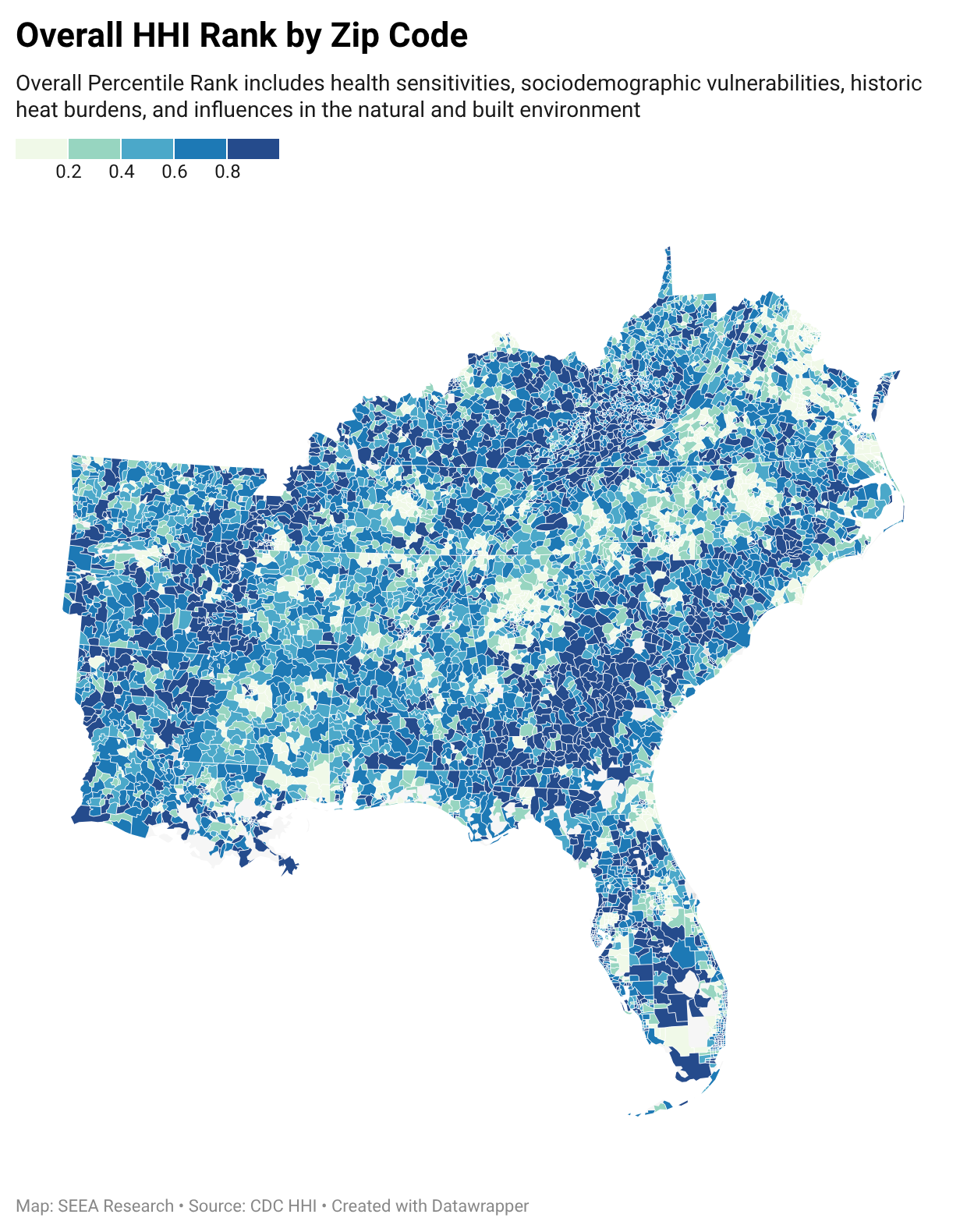
This month’s maps use the U.S. Centers for Disease Control and Prevention (CDC) Heat & Health Index (HHI), which combines historical temperature patterns, heat-related illness data, and community characteristics to identify where residents are most vulnerable to extreme heat (indicated by higher overall HHI ranking scores). In addition to the frequency of extreme heat days, the index factors in environmental features that influence heat exposure, such as tree canopy, air pollution, housing types, or access to transportation (HHI Natural and Built Environment). The index also includes demographic and socioeconomic conditions associated with increased vulnerability, such as age, disability, poverty, education levels, social isolation, and prolonged outdoor work (HHI Sociodemographic Vulnerability). The health conditions associated with greater sensitivity to heat include asthma, COPD, diabetes, obesity, cardiovascular disease, and poor mental health (HHI Health Sensitivities).
A few key patterns are evident in the HHI maps. Much of the Southeast scores high on measures of sociodemographic vulnerability and heat-sensitive health conditions. The maps highlight geographic disparities, including differences across rural and urban communities and regional hotspots where environmental factors like limited tree canopy, poor air quality, or transportation barriers may increase exposure to extreme heat. Like in any geographical analysis, localized risk factors are statistical: not everyone in a vulnerable community faces the same risk, and vulnerability certainly exists for some households in communities with lower HHI scores. Even with these limitations, the Heat & Health Index can help identify locations in need of interventions during extreme heat events, and can inform state and local resilience planning efforts.
One important consideration not shown in the HHI maps, however, is whether households have access to air conditioning to help protect residents from dangerous indoor heat.
Air Conditioning: More Critical Than Ever
Air conditioning is often the most immediate protection available when temperatures become dangerous. Most households, particularly in the South, depend on AC to maintain healthy indoor temperatures during summer, yet many do not have reliable or affordable access to air conditioning in their homes. Air conditioning uses significant energy to operate, contributing to higher household electricity costs and peak power demand in summer afternoons that stress the grid. Although many communities open air-conditioned cooling centers or public spaces during periods of extreme heat, heat risks are complicated for households who lack access to reliable transportation.
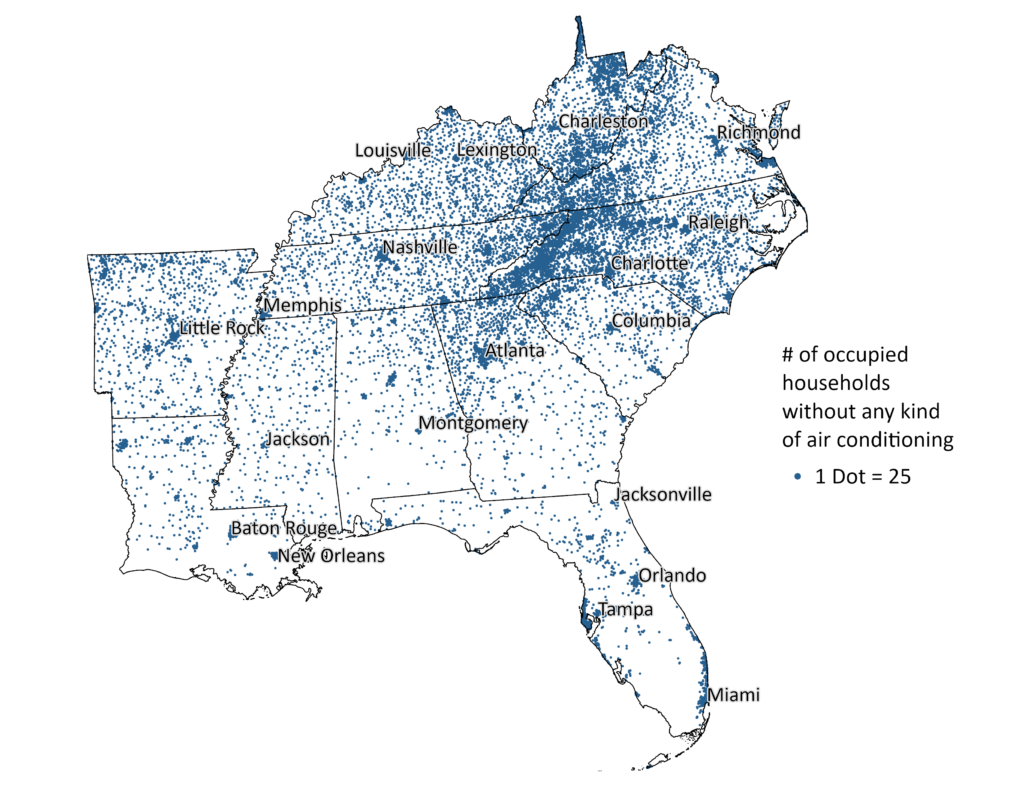
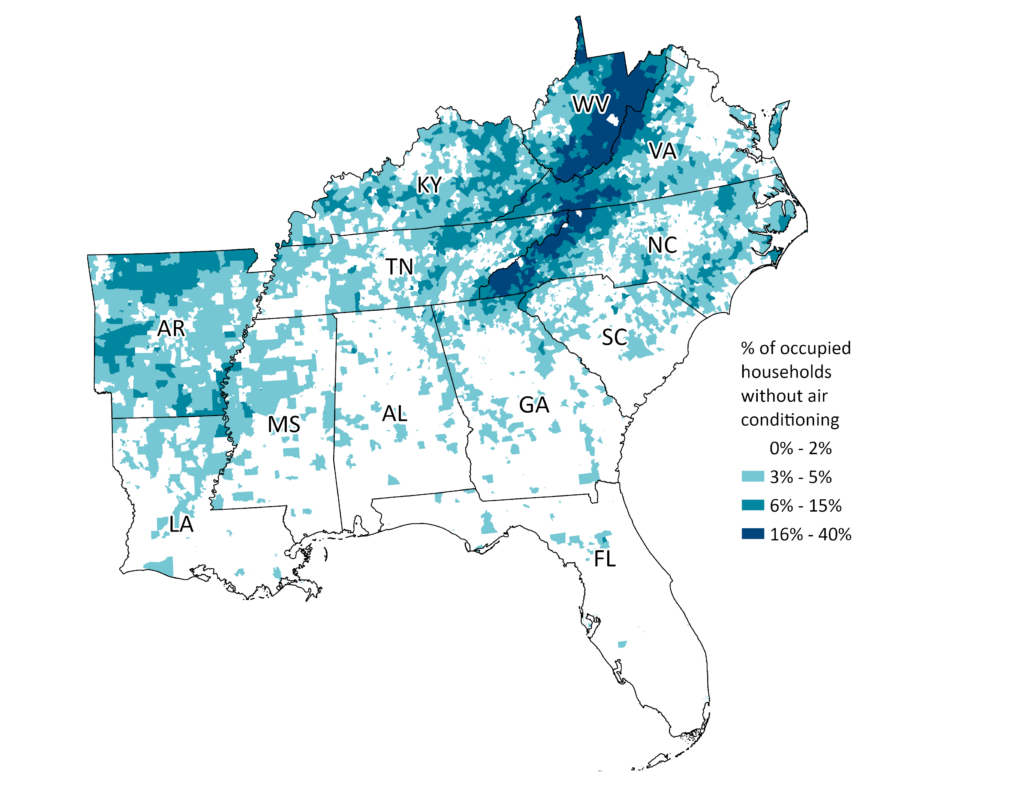
The U.S. Census Bureau has recently estimated the number of households nationally that lack air conditioning (AC). Although households in the South are more likely to have air conditioning than homes in some other regions, the data still reveal significant numbers of households in the region without any access to air conditioning.
The map below on the left shows one dot for every 25 households without AC, while the map on the right shows a shaded map for each zip code where 3% or more of the homes are not air conditioned. The Appalachian Mountains stand out, with between 16-40% of homes lacking air conditioning; however, many of these homes may be in cooler climate zones where other cooling strategies are still effective. Even in cooler regions, households without AC may be vulnerable during increasingly frequent and longer heat waves, while the number of households without air conditioning in Florida and the deep South, where high summer temperatures regularly top 90°F, highlights an additional layer of risk.
What Can We Do in the Southeast?
Heat resilience is both a household- and a community-level challenge, and it must be approached from both perspectives. Incorporating heat risks into resilience planning is more critical than ever. Communities can invest in immediate interventions like cooling centers and raise awareness of programs that assist residents with utility bills or protect households from disconnections during extreme events. Longer-term community strategies include updating new building energy codes and investing in tree canopy or other urban heat mitigation approaches. At the household level, a near-term solution that has long-lasting impacts is to invest in home weatherization and other energy efficiency improvements that help homes withstand heat more affordably. SEEA is exploring heat challenges through a 2026 partnership with the Lincoln Institute of Land Policy, examining how energy codes, building design, and other policy tools can strengthen household resilience to heat, particularly for vulnerable populations.
The growing intensity and duration of heat events have raised alarms for a reason: heat is a defining challenge across Southeast communities. The datasets illustrated here show the complexities of vulnerability, where health conditions, socioeconomic factors, environmental conditions, and access to cooling all play a role in risk during extreme heat events. Together, heat vulnerability data and cooling access models can help communities identify needed investments to keep homes safer, residents healthier, and indoor temperatures more livable across the Southeast. Whether through weatherization and repair programs, building energy codes, or resilience planning, well-informed investments can help protect the communities most vulnerable to extreme heat.