

Category: Map of the Month
How Much Work is Required to Pay Energy Bills? September Map of the Month
By Dr. Amy Lovell
Senior Research Associate, Southeast Energy Efficiency Alliance (SEEA)
There is rising concern about energy affordability in the Southeast, with fuel costs and rates rising due to both domestic and international influences. The U.S. Bureau of Labor Statistics reports that costs in the South region have continued to rise, led by housing-related costs including energy, and transportation costs driven by a 29% increase in motor fuels since this time last year. Growing electricity demand and even higher projected future electricity demand has people wondering where new electricity generation will come from and what impacts ratepayers will feel from how states and utilities plan to build what is needed. With already strained household budgets for housing, medical, and transportation costs, high utility bills are becoming harder to absorb. All of this has focused national attention on household energy affordability.
This month’s map investigates energy affordability and some ways that we measure it in the Southeast. SEEA’s executive director, John Silkey, wrote a recent op-ed focused on the income side of affordability. Here, we dig into affordability across the Southeast and connect it to workers’ wages: How much extra work would a household need to take on just to make energy affordable?
One way to estimate the gravity of energy cost impacts is to express those costs as a fraction of household income, often known as “energy burden.” The U.S. Department of Housing and Urban Development’s (HUD’s) affordability guidelines are based on keeping overall housing costs at or below 30% of a family’s income. If energy costs exceed 20% of housing expenses, or >6% of the residents’ income, the household would be considered to have a high burden from those costs. Severely burdened households spend over 10% of their annual income on energy expenses. These costs put pressure on budgets for food, medical care, and other housing needs, causing many energy-burdened families to have to forgo essentials to pay for energy, and deepening existing vulnerabilities for low-income households. In addition to household energy costs, high and unpredictable fuel costs for transportation add financial strain.
Since affordability is often characterized relative to household income, it is important to zero in on energy expenses for low- and moderate-income (LMI) household, because bulk averages may mask affordability challenges. LMI households have incomes at or below 80% of the area median income (AMI), as tabulated in the Low-Income Energy Affordability Database (LEAD) at the U.S. Department of Energy.
In the Southeast, energy burdens are regionally high for LMI households: only Florida, Virginia and North Carolina are below 8%, which is already above the 6% considered to be a financial burden. Alabama, Louisiana, and Mississippi are all over the 10% severe threshold, indicating a significant affordability challenge in these areas. Energy costs vary by state and by housing type, but average around $1800/year or $150/month for low-income households across the region.
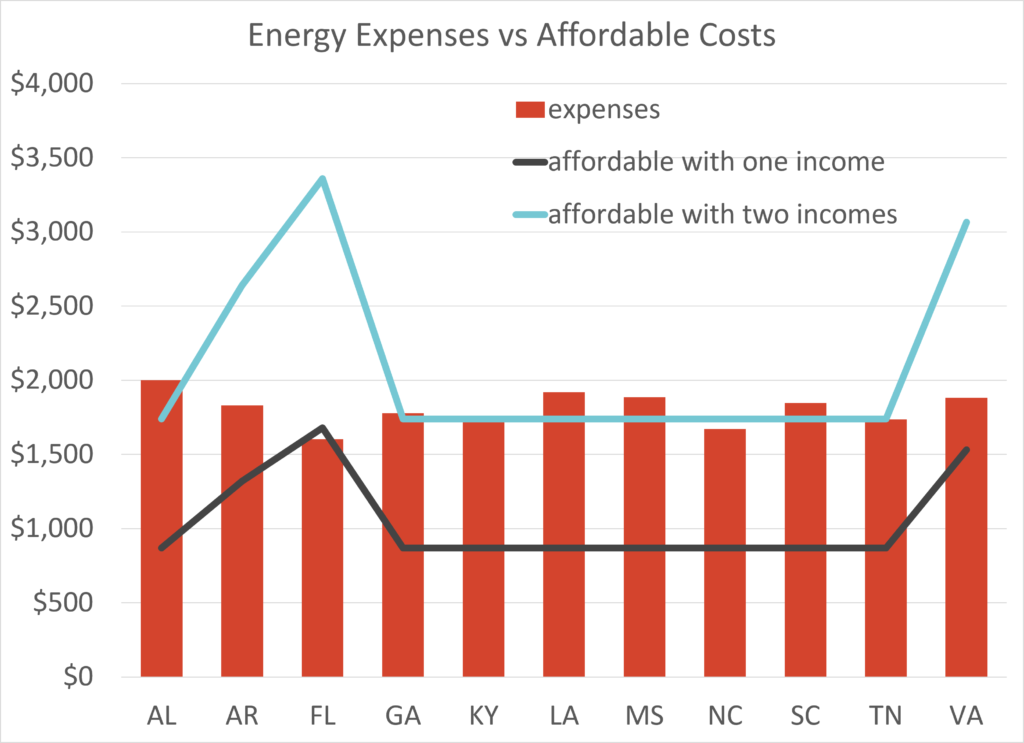
Assuming a full-time minimum-wage job, average energy costs represent a high energy burden in every Southeastern state. In Alabama, Georgia, Kentucky, Louisiana, Mississippi, South Carolina, and Tennessee, average energy expenses require more than 6% of two minimum wage incomes, as shown in the chart below.
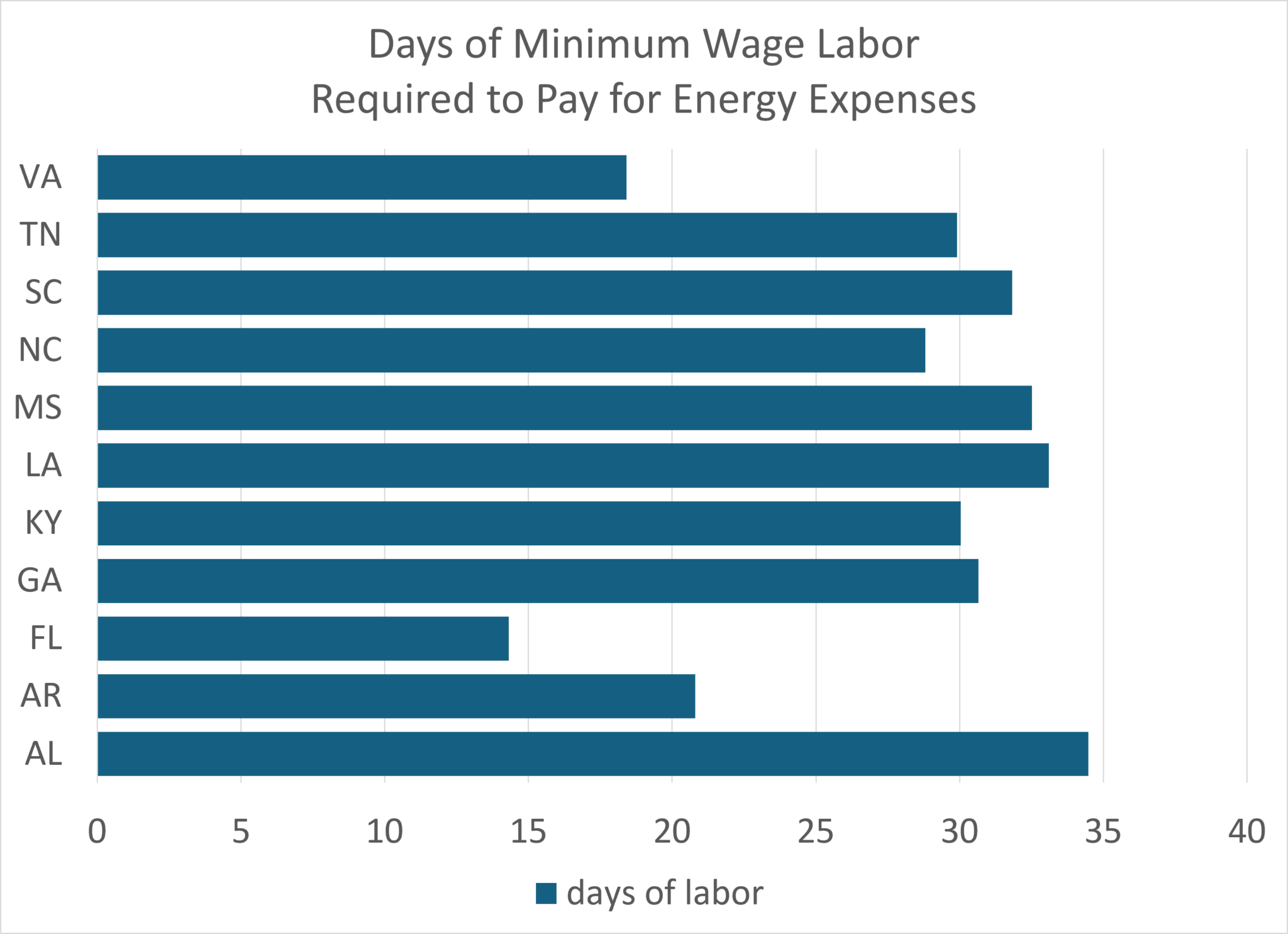
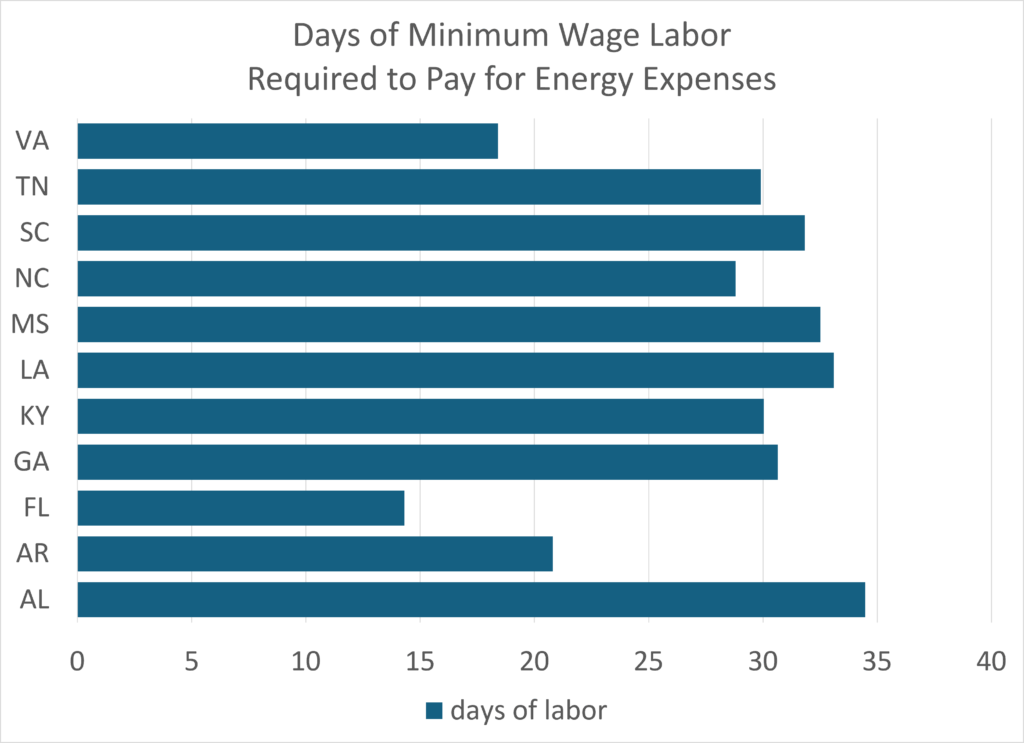
Also illustrated below is the number of days of full-time labor at minimum wage that would be required each year to pay the average LMI energy expenses. In the majority of Southeastern states, more than a month of full-time salary is required to meet typical energy costs.
Another metric that can be used to assess energy-related financial challenges is the energy affordability gap (EAG), a measure of the difference between actual expenses and an affordable level of expenses. The EAG provides an indication of how much funding would really be required to address affordability, so can reveal geographies in greatest need of investments. Energy affordability gaps are over $500/year for an average low-income family in Alabama, Louisiana, or Mississippi, and would require more than 2 weeks of extra full-time work at minimum wage to close the gap.
The Energy Equity Explorer (EEE), a collaboration between SEEA and the Texas Energy Poverty Research Institute (TEPRI), is a tool that we developed for visualizing and analyzing energy costs and burdens, with a focus on low-income household data from multiple public data sets. If you’d like to investigate low-income energy affordability influences in your area, try the tool! Questions you could pursue include:
- Where are energy burdens the highest? How does it vary between urban and rural communities?
- How do renters fare compared to homeowners?
- Do affordability challenges correlate with other social vulnerabilities?
- Which housing types and ages have higher costs and affordability challenges?
Where the CDFIs Are: August Map of the Month
By William D. Bryan, Ph.D.
Community development financial institutions (CDFIs) are critical financial lifelines for households that lack access to capital needed to address deferred maintenance and improve the efficiency and long-term affordability of their housing. There are now more than 1,300 certified CDFIs nationwide, with assets that have grown from $47B in 2011 to $446B in 2025, according to research from the Federal Reserve Bank of New York. These funds provide capital to meet a range of critical community needs, from the construction of affordable housing to microloans and even energy efficiency upgrades.
This month, we are taking a deep dive into where CDFI capital is actually flowing across SEEA’s footprint, how it is being deployed, and what role this capital plays in funding building upgrades.
Using U.S. Treasury data from the CDFI Fund’s FY2022 Transaction Level Report (TLR), the most recent data available, we mapped more than 300,000 individual CDFI transactions across our 11-state footprint and then filtered this to 49,000 transactions (about 15% of all transactions) that were intended to fund building improvements, including home repair and rehabilitation and new construction financing. While substantial, this dataset is a subset of all CDFI lending activity because it is only required for recipients of federal CDFI award funding.
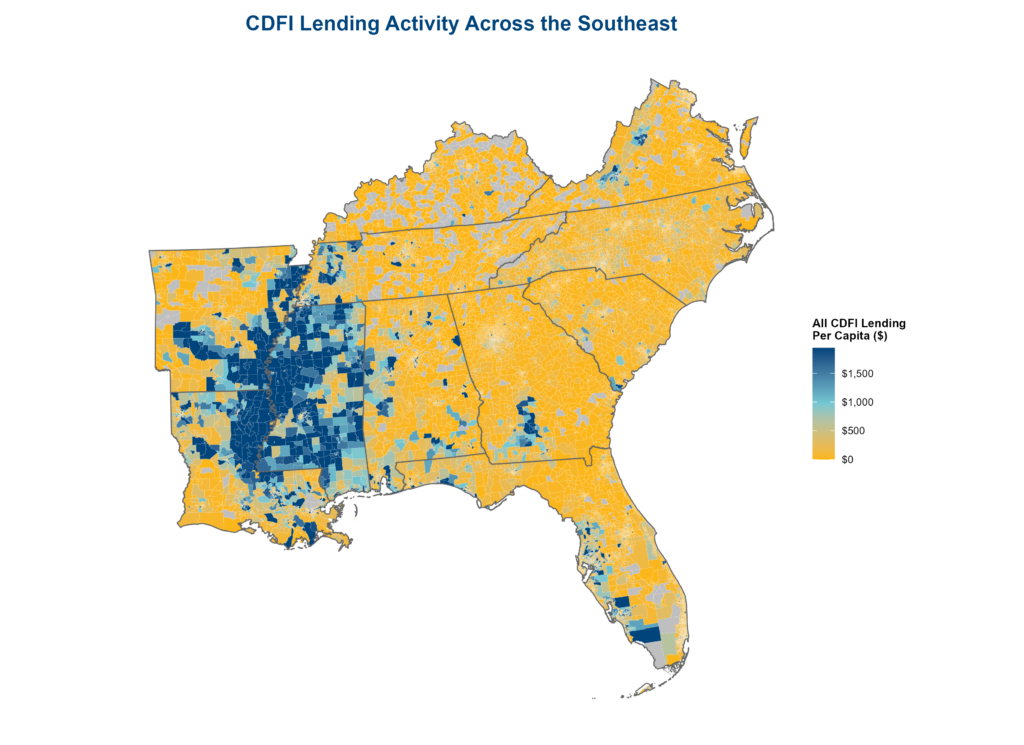
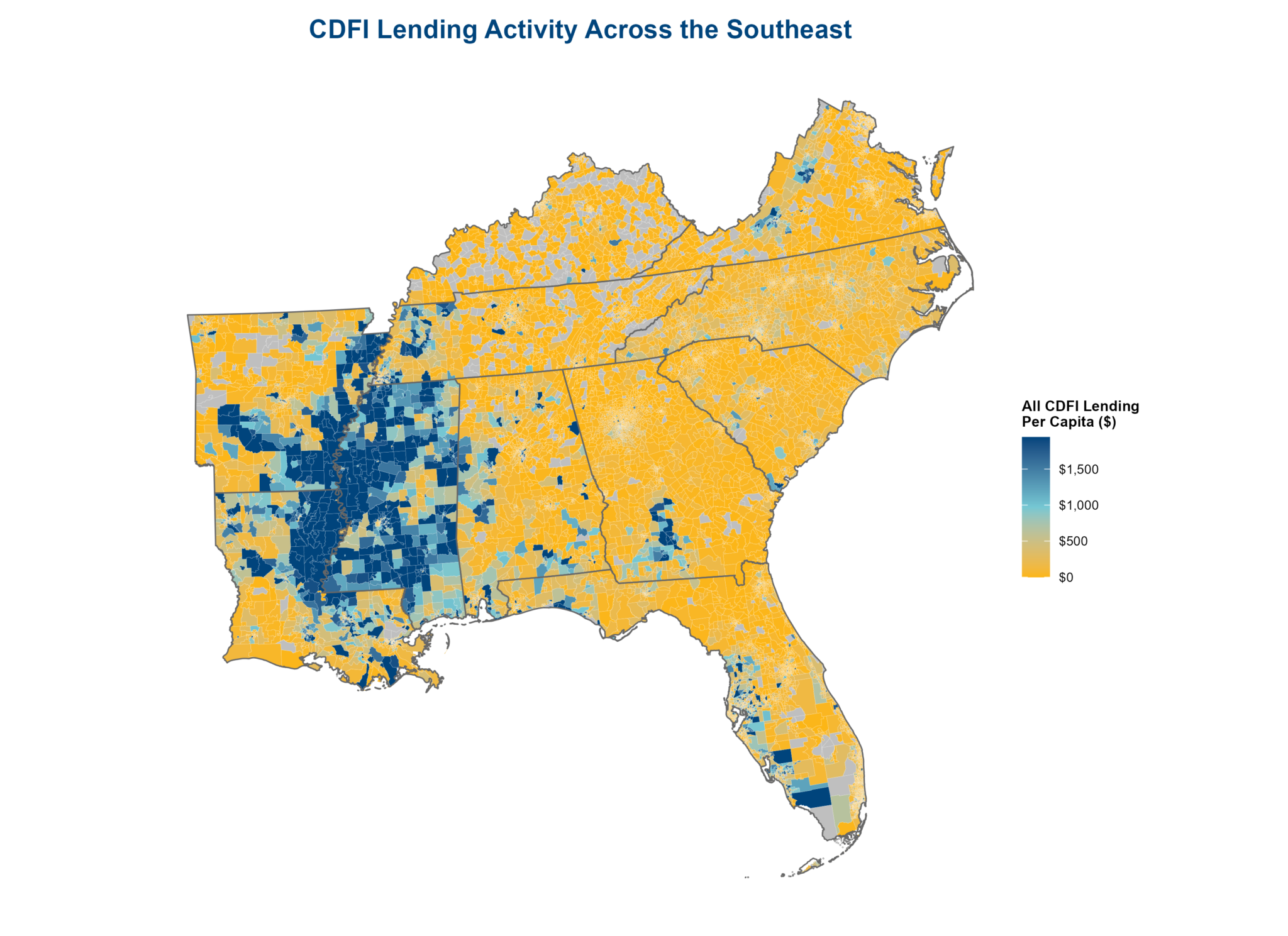
As indicated in Figure 1, overall lending activity per capita was overwhelmingly concentrated in areas surrounding the Mississippi River in Arkansas, Mississippi, and Louisiana—the region where there is a high concentration of local CDFIs, according to the Federal Reserve Bank of New York. Across the entire region, microloans (66% of all transactions) to small businesses and home purchase loans (11% of all transactions) were the most common types of lending. The CDFI portfolio overall represents a critical injection of more than $30.2B, just in FY22, to communities throughout the South that often lack access to traditional financing and capital.
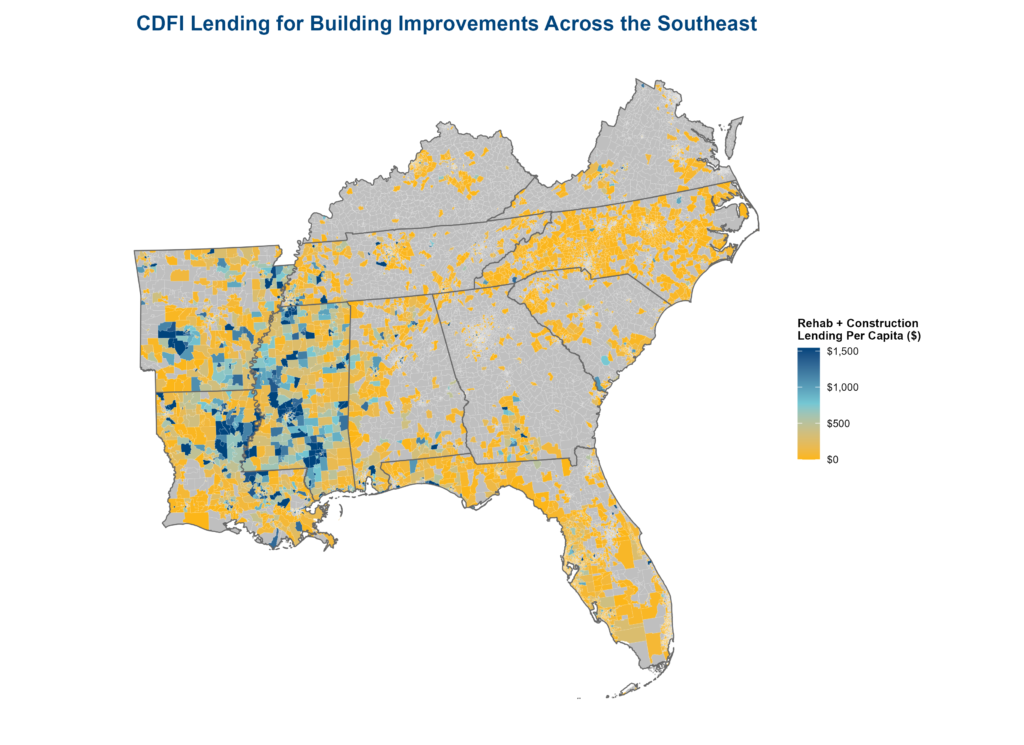
But CDFIs also play a critical role in providing access to capital that can help households address deferred maintenance and address efficiency drags on their home. Lending to support home upgrades made up around 15% of total transactions in the Southeast, but a much larger share of total dollars—more than one third (37%) of all capital deployed across the region, totaling $11.1B in FY22, as indicated in Figure 2. New construction financing ($6.7B) exceeded rehab and home improvement lending ($4.4B) overall, even though rehab and home improvement loans made up nearly three times as many individual transactions.
This type of lending is critically important. For many households, CDFI capital is often the only avenue for fixing a damaged roof, providing a safer electrical system, or installing a more efficient HVAC system—the kind of work that determines whether their home will be affordable to maintain and operate in the future. Geographically, the lending patterns are similar to the overall lending picture, in exaggerated fashion, with the Arkansas and Mississippi Delta region leading the Southeast in terms of lending per capita. By contrast, Georgia and Kentucky have modest rehabilitation and home improvement financing (about $120M and $59M respectively in FY22) despite both states having deep housing needs.
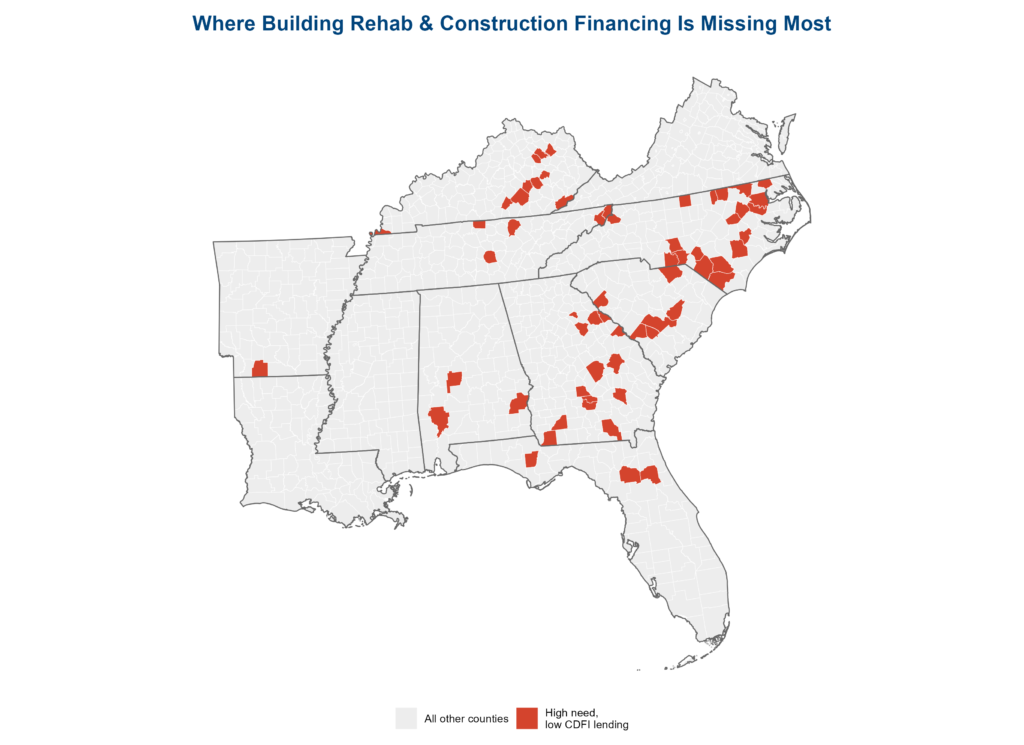
Figure 3 shows the lending gaps, isolating just the places where need is high (specifically, high poverty rates) and lending per capita is low compared to the rest of the Southeast. At the county level, the highest concentration of underserved counties is in North Carolina and South Carolina, with localized capital gaps in Alabama, Georgia, Kentucky, and Virginia.
Taken together, this data highlights the essential services that CDFIs play in providing access to billions in capital for a wide range of needs across the South’s most underserved communities. Yet this capital is unevenly distributed in ways that make it unable to fully meet the region’s critical housing needs. While lenders are doing heavy lifting work in some of the most under-resourced communities in the South, like the Delta, in other high-need areas this concentrated approach has not been deployed with the same kind of scale.
Across several recent projects—including SEEA’s SEEDS initiative—SEEA has been working to meaningfully develop pathways to improve access to capital for deferred maintenance and home upgrades. We see financing as the critical piece of the puzzle for improving household efficiency at scale for low-income residents, who often lack access to the capital needed to invest in expensive home upgrades. The data outlined here underscores that CDFI capital is a critical tool for bridging affordability and efficiency needs, underwriting billions of dollars of home upgrades already. Yet this data also provides a roadmap for closing critical service gaps to ensure that this capital continues to create community transformation across the Southeast.
Extreme Heat, Unequal Risk: July Map of the Month
Heat is More Than a Weather Problem
The summer news stream is filled with tales of record temperatures, heat waves, heat domes, and the meteorological term El Niño has practically become a household word. While extreme heat has far-reaching consequences for ecosystems, energy demand, and infrastructure, a growing concern is its impact on human health.
Weather forecasts and newscasts often include advice about how to stay safe in the heat, but not every community experiences heat in the same way. The difference between a hot day and a public health emergency depends on many factors: a person’s age, pre-existing health conditions, and whether their home can keep them safely and affordably cool. This month’s map explores the connection between extreme heat and household health risks, highlighting communities where limited access to air conditioning heightens vulnerability.
CDC Heat & Health Index
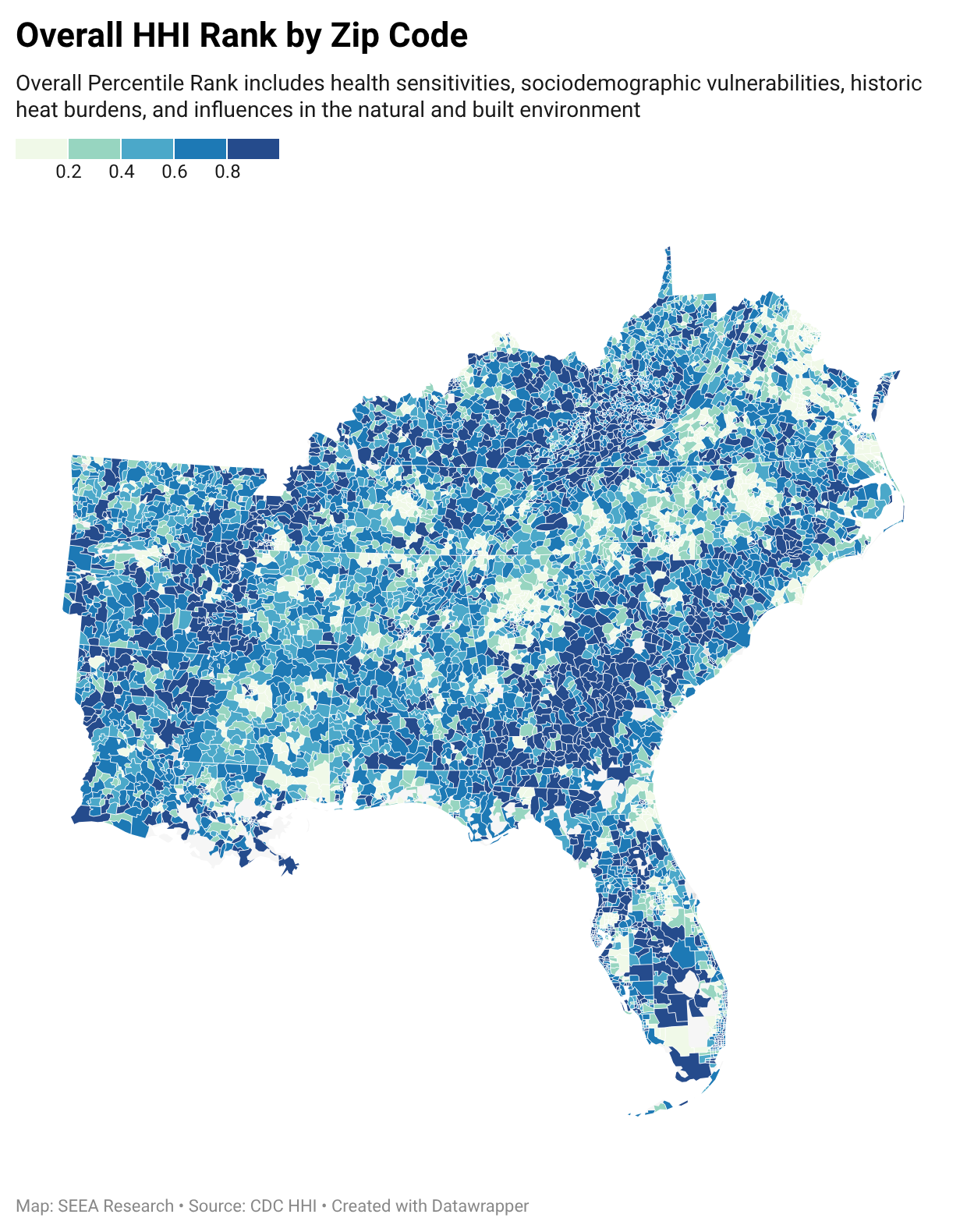
This month’s maps use the U.S. Centers for Disease Control and Prevention (CDC) Heat & Health Index (HHI), which combines historical temperature patterns, heat-related illness data, and community characteristics to identify where residents are most vulnerable to extreme heat (indicated by higher overall HHI ranking scores). In addition to the frequency of extreme heat days, the index factors in environmental features that influence heat exposure, such as tree canopy, air pollution, housing types, or access to transportation (HHI Natural and Built Environment). The index also includes demographic and socioeconomic conditions associated with increased vulnerability, such as age, disability, poverty, education levels, social isolation, and prolonged outdoor work (HHI Sociodemographic Vulnerability). The health conditions associated with greater sensitivity to heat include asthma, COPD, diabetes, obesity, cardiovascular disease, and poor mental health (HHI Health Sensitivities).
A few key patterns are evident in the HHI maps. Much of the Southeast scores high on measures of sociodemographic vulnerability and heat-sensitive health conditions. The maps highlight geographic disparities, including differences across rural and urban communities and regional hotspots where environmental factors like limited tree canopy, poor air quality, or transportation barriers may increase exposure to extreme heat. Like in any geographical analysis, localized risk factors are statistical: not everyone in a vulnerable community faces the same risk, and vulnerability certainly exists for some households in communities with lower HHI scores. Even with these limitations, the Heat & Health Index can help identify locations in need of interventions during extreme heat events, and can inform state and local resilience planning efforts.
One important consideration not shown in the HHI maps, however, is whether households have access to air conditioning to help protect residents from dangerous indoor heat.
Air Conditioning: More Critical Than Ever
Air conditioning is often the most immediate protection available when temperatures become dangerous. Most households, particularly in the South, depend on AC to maintain healthy indoor temperatures during summer, yet many do not have reliable or affordable access to air conditioning in their homes. Air conditioning uses significant energy to operate, contributing to higher household electricity costs and peak power demand in summer afternoons that stress the grid. Although many communities open air-conditioned cooling centers or public spaces during periods of extreme heat, heat risks are complicated for households who lack access to reliable transportation.
The U.S. Census Bureau has recently estimated the number of households nationally that lack air conditioning (AC). Although households in the South are more likely to have air conditioning than homes in some other regions, the data still reveal significant numbers of households in the region without any access to air conditioning.
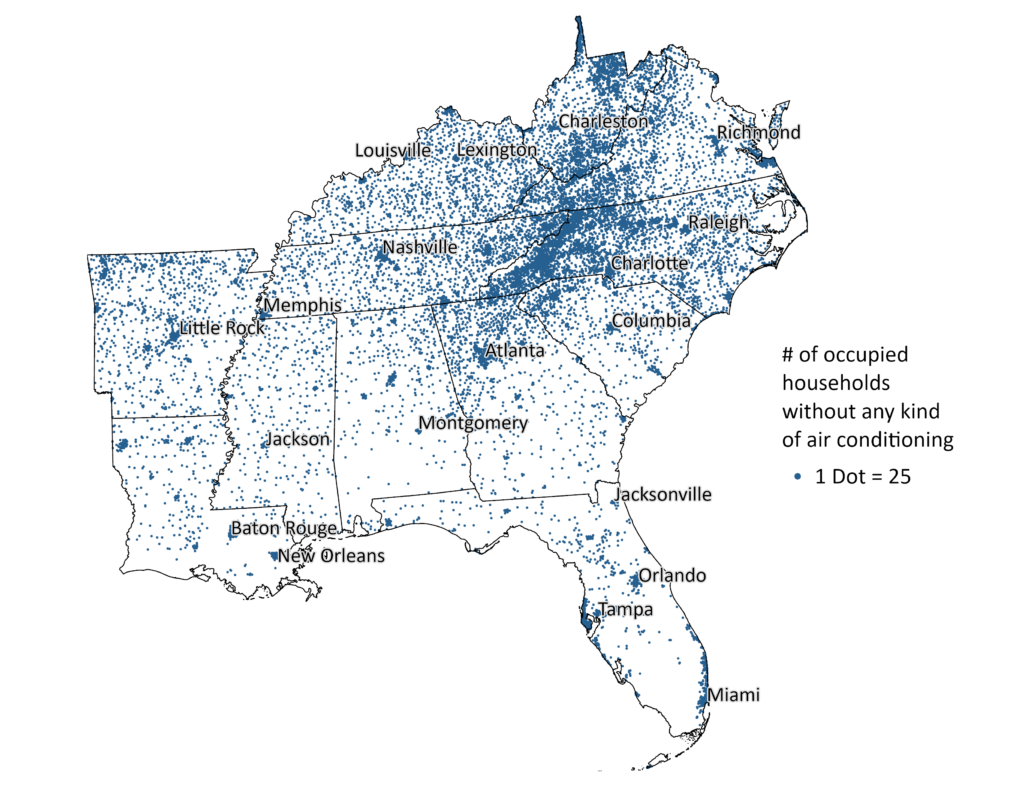
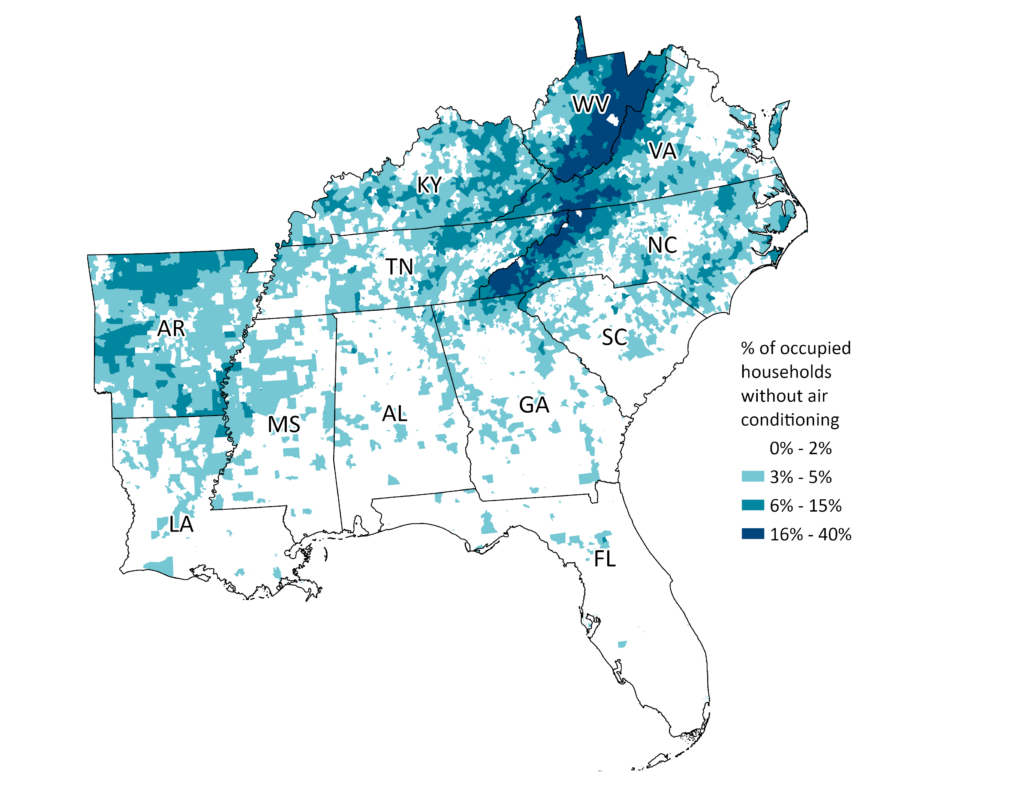
The map below on the left shows one dot for every 25 households without AC, while the map on the right shows a shaded map for each zip code where 3% or more of the homes are not air conditioned. The Appalachian Mountains stand out, with between 16-40% of homes lacking air conditioning; however, many of these homes may be in cooler climate zones where other cooling strategies are still effective. Even in cooler regions, households without AC may be vulnerable during increasingly frequent and longer heat waves, while the number of households without air conditioning in Florida and the deep South, where high summer temperatures regularly top 90°F, highlights an additional layer of risk.
What Can We Do in the Southeast?
Heat resilience is both a household- and a community-level challenge, and it must be approached from both perspectives. Incorporating heat risks into resilience planning is more critical than ever. Communities can invest in immediate interventions like cooling centers and raise awareness of programs that assist residents with utility bills or protect households from disconnections during extreme events. Longer-term community strategies include updating new building energy codes and investing in tree canopy or other urban heat mitigation approaches. At the household level, a near-term solution that has long-lasting impacts is to invest in home weatherization and other energy efficiency improvements that help homes withstand heat more affordably. SEEA is exploring heat challenges through a 2026 partnership with the Lincoln Institute of Land Policy, examining how energy codes, building design, and other policy tools can strengthen household resilience to heat, particularly for vulnerable populations.
The growing intensity and duration of heat events have raised alarms for a reason: heat is a defining challenge across Southeast communities. The datasets illustrated here show the complexities of vulnerability, where health conditions, socioeconomic factors, environmental conditions, and access to cooling all play a role in risk during extreme heat events. Together, heat vulnerability data and cooling access models can help communities identify needed investments to keep homes safer, residents healthier, and indoor temperatures more livable across the Southeast. Whether through weatherization and repair programs, building energy codes, or resilience planning, well-informed investments can help protect the communities most vulnerable to extreme heat.
June Map of the Month: Transportation Costs and Burdens Across the Southeast
Transportation Costs and Burdens Across the Southeast
Source: Center for Neighborhood Technology
Transportation is a vital household need. Without access to reliable transportation, people may struggle to hold down a job, get their kids to school, get groceries, and obtain medical care. We live at a time when there are more forms of transportation available than ever before, but often transportation access is defined by affordability and the built environment.
A household is considered transportation burdened when it spends 15% or more of its annual income on transportation. The widely accepted threshold for combined housing and transportation affordability is 45% of household income, with no more than 30% going to housing and 15% to transportation. Yet a recent U.S. Bureau of Labor Statistics report found that in 2024, American households spent an average of 50% of their income on housing and transportation combined, well above that threshold.
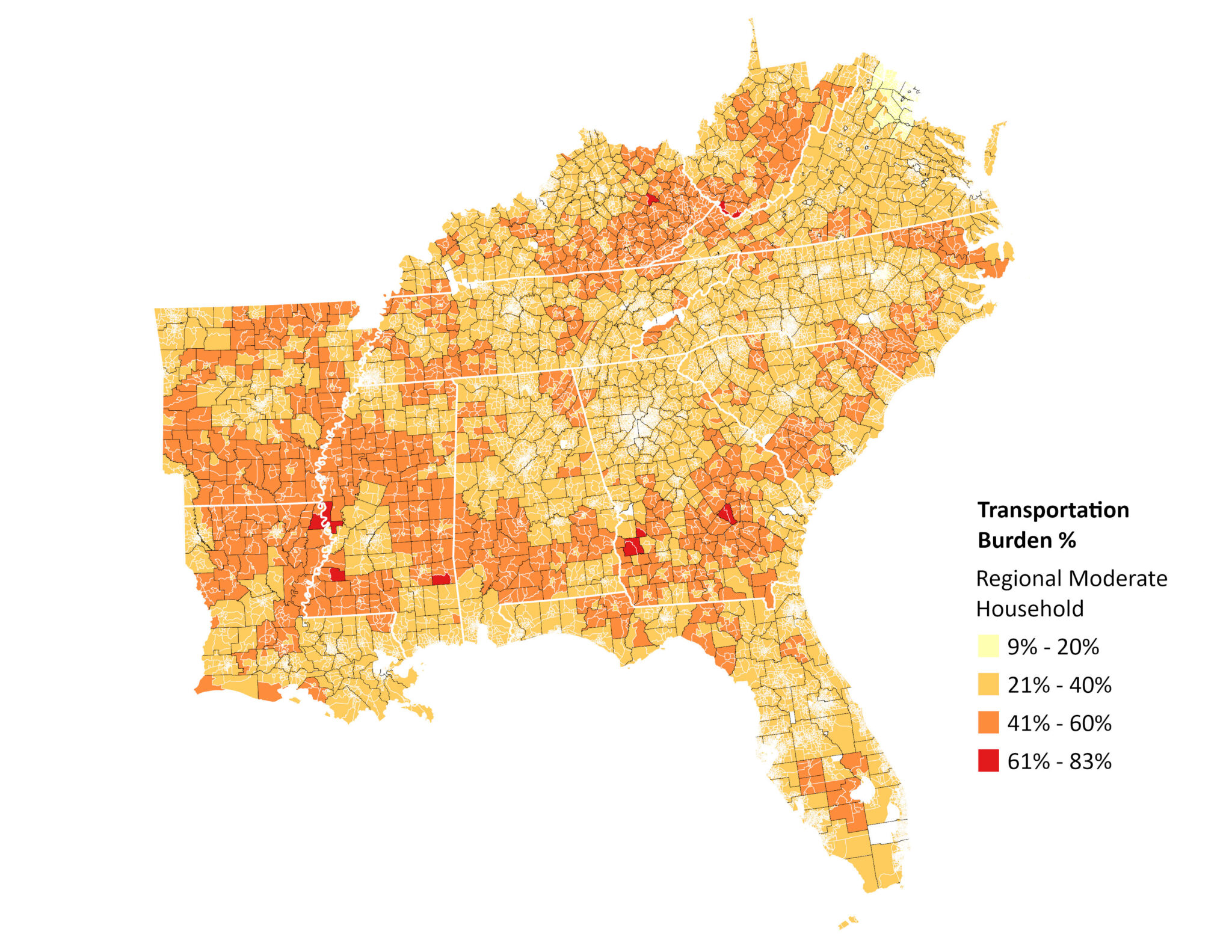
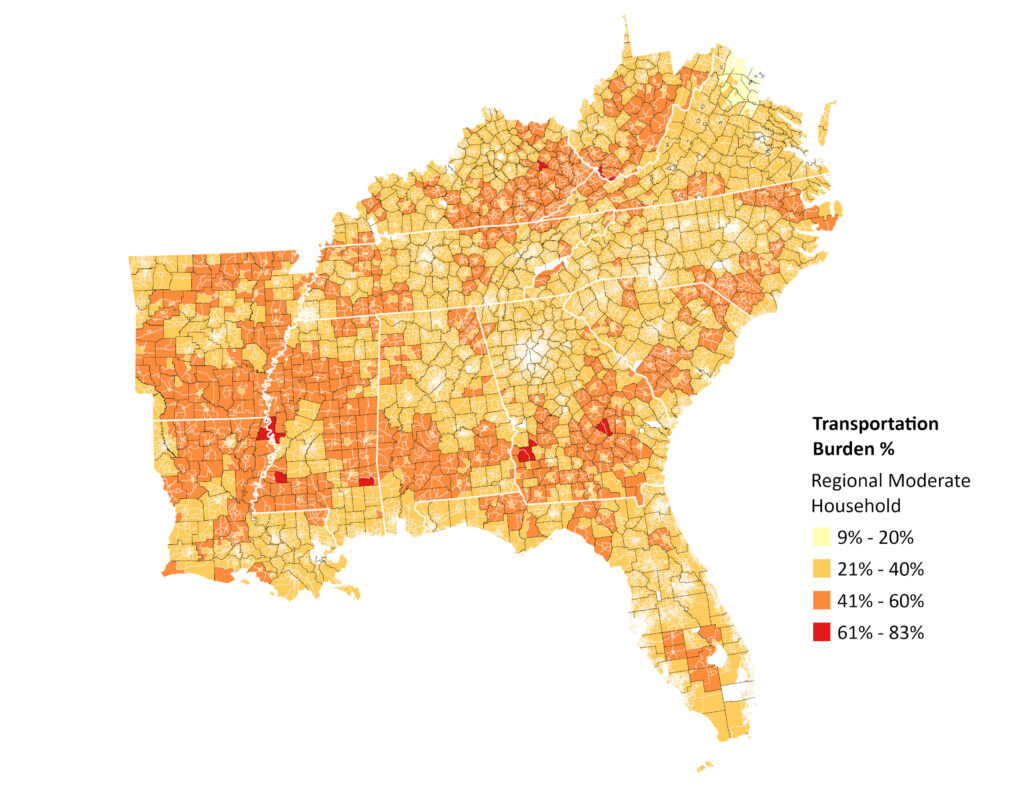
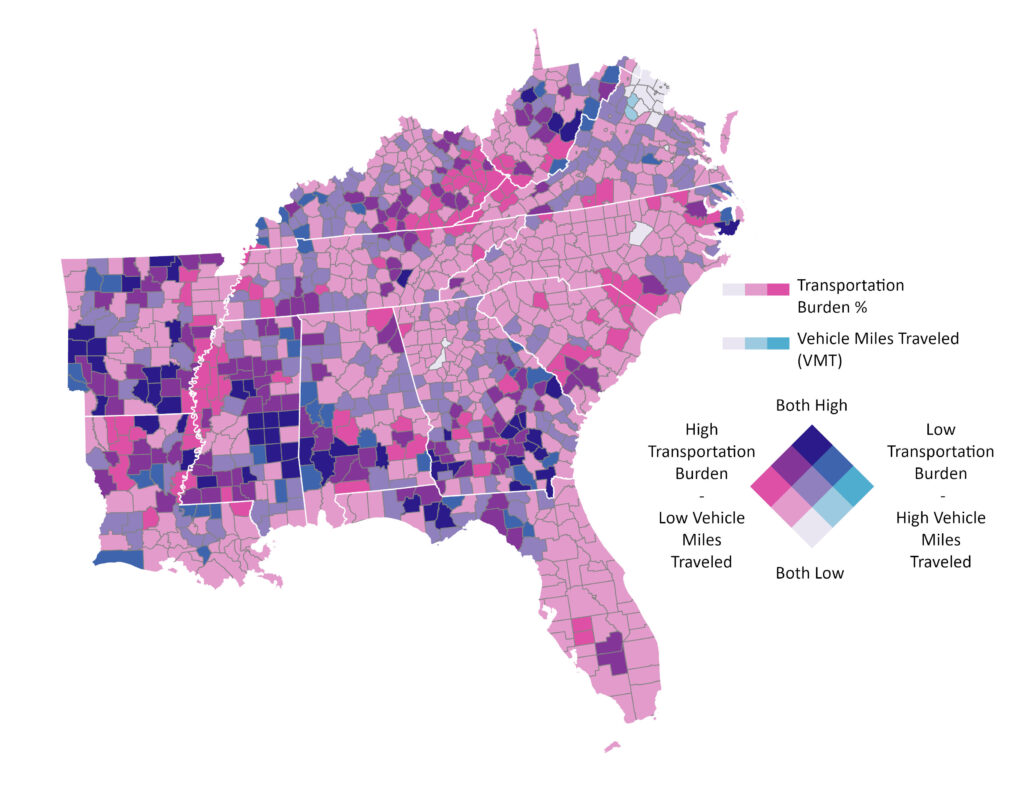
This month’s map draws on data from the Center for Neighborhood Technology’s (CNT) Housing and Transportation (H&T) Affordability Index to visualize transportation burden and annual vehicle miles traveled for moderate-income households across the Southeast. As CNT describes it, the H&T Index expands the conventional definition of housing affordability (rent and utilities) to include transportation costs, so that households and policymakers better understand the true cost of where people live. The model captures costs across three categories: auto use, auto ownership, and public transit use.
In the Southeast, the most transportation-burdened households are concentrated in rural areas along the Appalachian Mountains, the Mississippi Delta, and in the Black Belt, where limited transit infrastructure and low-density development make car ownership not a choice but a necessity. The 13 most highly burdened census tracts fall across West Virginia, Kentucky, Louisiana, Mississippi, and Georgia.
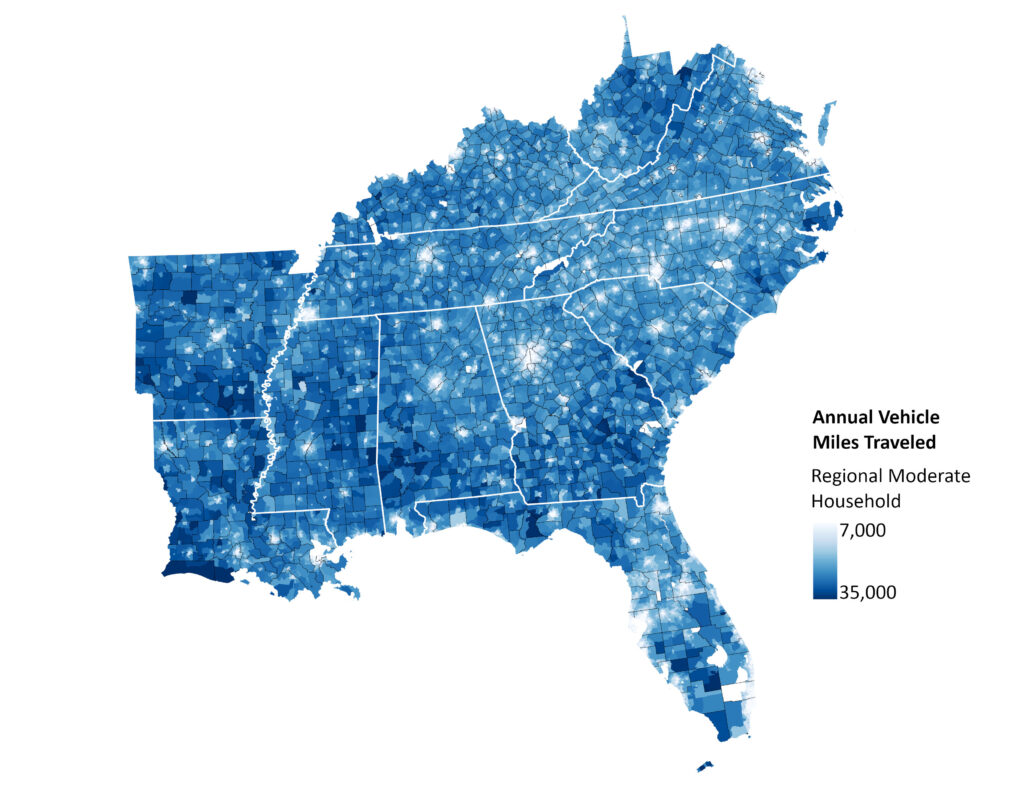
Vehicle miles traveled data confirm what the burden maps suggest: Urban areas are the most transportation-efficient locations, where density and transit access reduce dependence on personal vehicles.
A 2024 study published in the Journal of Transport Geography found that, compared with urban areas, rural areas in the United States have less connected pedestrian, bicycling, and transit infrastructure. Rural residents also tend to travel longer distances to access essential services and opportunities, resulting in a form of “forced car” reliance. At the same time, lower incomes and higher poverty rates among rural populations can increase the financial burden of transportation.
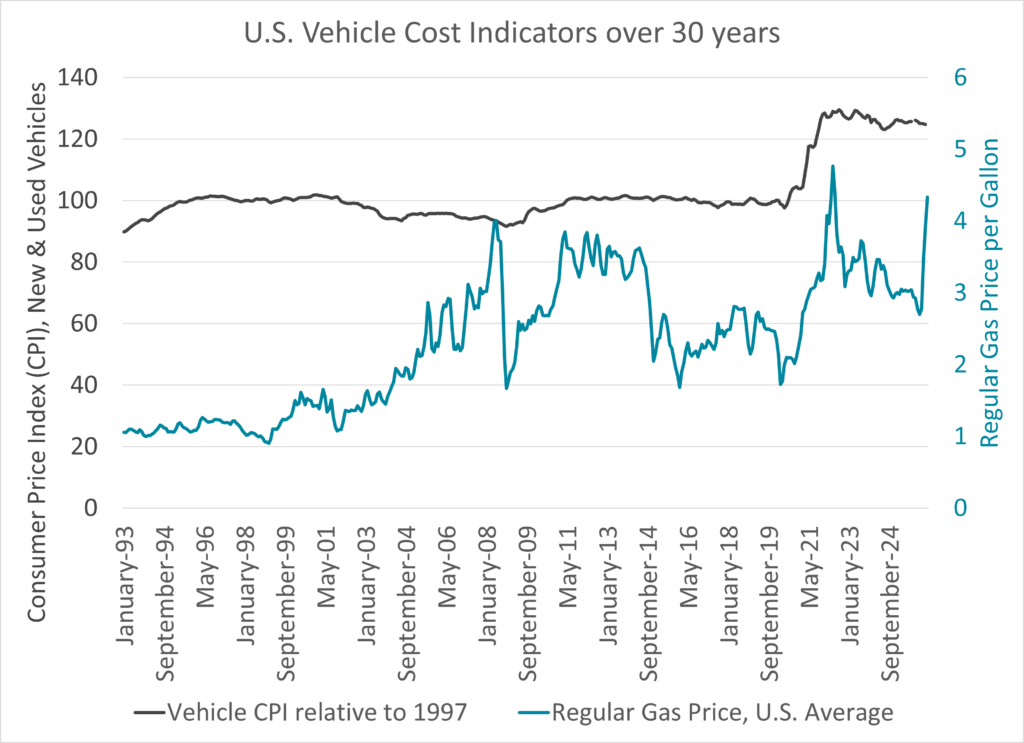
These local patterns are compounded by a national surge in transportation costs since 2020. New car prices have risen approximately 29% since March 2020, while used car prices have climbed about 34%, both outpacing overall inflation, as shown by the consumer price index (CPI) charts below.
Car insurance costs have also risen 56% since January 2020, according to BLS data, though premiums saw a slight dip in 2025. For households that rely on gasoline, costs have been particularly volatile, as pump prices remain susceptible to geopolitical disruptions and global supply shifts.
These affordability issues strain household finances most for low- and moderate-income households in the Southeast, who have the highest vehicle miles traveled (VMT) and experience the highest transportation burdens. Faced with these pressures, many consumers are turning to used electric vehicles as a more affordable alternative.
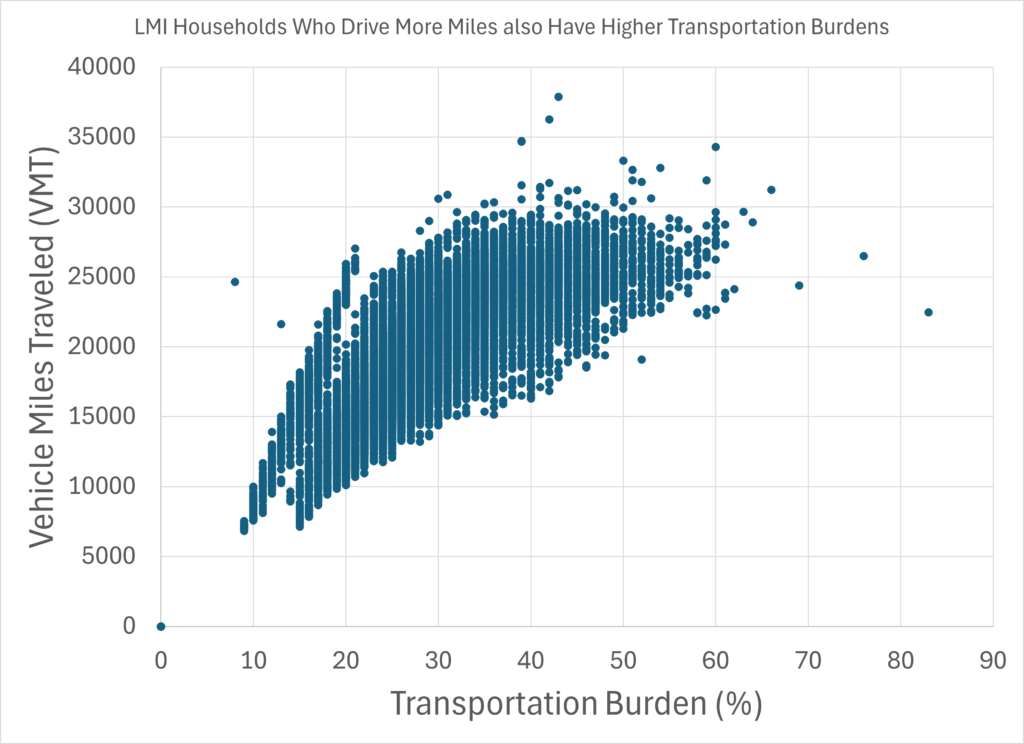
Taken together, these findings provide a data-driven lens for identifying where transportation burden is most acute in the Southeast and where targeted investments, whether in transit service, pedestrian and bicycling infrastructure, EV infrastructure, or land use policy, can have the greatest impact.
SEEA’s Energy Efficient Transportation portfolio works to address these challenges across the Southeast through EV policy guidance, utility electrification programs, and technical assistance to help states and communities expand access to cleaner, more affordable transportation options.
Data Considerations
The maps here draw on CNT’s 2022 data, which remains among the most comprehensive available. Yet many national datasets do not track transportation burden at a granular level, and key sources like the U.S. DOT’s Local Area Transportation Characteristics for Households (2017) and HUD’s Location Affordability Index (2019) predate the cost spikes we have seen since 2020. As transportation costs continue to shift, updated and locally specific data will be essential for planners and policymakers to understand the true scale of the affordability crisis facing our region.
May Map of the Month
Where the contractors aren’t: mapping workforce deserts in the Southeast
By: William Bryan
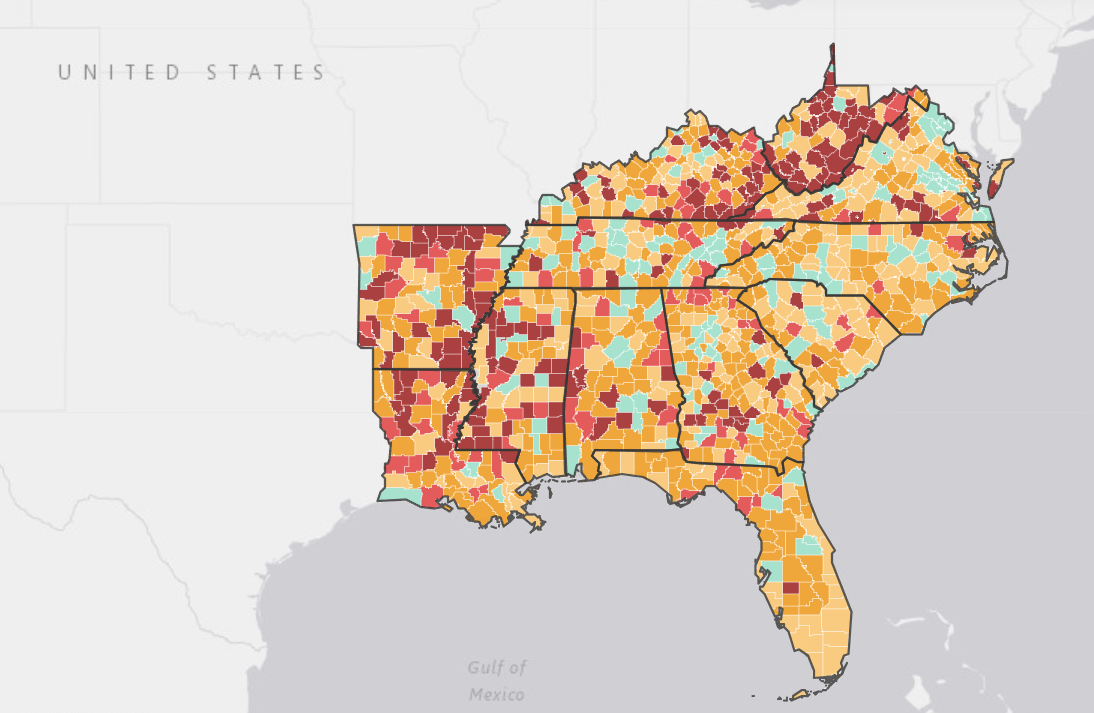
Of all the barriers to scaling energy efficiency (and there are many), none are as fundamental as having people who can do the work. Yet throughout the Southeast, the workers who are essential to carrying out energy efficiency upgrades don’t exist in meaningful numbers, especially in communities where they are needed the most.
This month’s map makes this problem visible by mapping contractor deserts across the Southeast. Using data from the U.S. Department of Energy’s 2025 U.S. Energy and Employment Report (USEER) and the Census Bureau’s American Community Survey, we calculated the number of efficiency workers per 1,000 housing units for every county in the Southeast. To gauge how this workforce aligns with housing needs, we estimated local housing upgrade need by layering in data on the age of housing and household income.
Across the Southeast, there are roughly 429,000 upgrade-relevant workers who serve around 38.5 million homes, one worker for every 90 households. But this masks wide disparities in access to skilled workers throughout the region.
We found 190 counties across the Southeast that are in “crisis,” where high housing upgrade demand meets low workforce capacity. Even where they are not actively facing a labor crisis, more than half of all counties in the South are either at risk of becoming, or already are, workforce deserts. Across all desert and at-risk counties, the ratio is one worker for every 206 homes, with a ratio of one for every 411 homes in the most severely underserved counties.
Geographically, workforce deserts are concentrated in Appalachia and the Black Belt regions. “Crisis” counties are especially prevalent in eastern Kentucky and virtually all of West Virginia, where high rates of older housing and limited financial resources have contributed to a housing stock in need of upgrades. These are also communities without a contractor market robust enough to serve this need, a result of the lack of local projects, travel distances from larger markets, and low household incomes that cannot sustain significant projects. Kentucky leads the Southeast with 33 counties in crisis, followed by West Virginia with 32. Taken together, just these two states make up a third of all crisis counties in the Southeast.
The other major concentration of crisis areas runs throughout western Mississippi, northern Louisiana, rural Arkansas, and the Black Belt of Alabama. Like Appalachia, these communities have aging housing, deferred maintenance, and a contractor market that is insufficient to meet local upgrade needs. Louisiana’s Evangeline Parish, for instance, has around 20 home upgrade workers serving 14,500 homes, or one per 726 households.
In Dallas County, Alabama, just 80 workers serve nearly 19,000 housing units. This shortfall is especially stark given that 39% of all housing in Selma was destroyed by a major tornado in 2023. Despite initiatives from Alabama Department of Economic and Community Affairs (ADECA), the City of Selma, and the U.S. Department of Housing and Urban Development (HUD) to fund and support disaster recovery and home upgrades, these efforts require more workers than currently serve the community to meet the scale of need.
It is worth noting that our analysis likely understates the problem. The data we are using locates workers where their employers are based, not where they actually perform work, which means that rural communities surrounded by stronger retrofit markets in nearby cities may appear better served than they are. We crosschecked these findings with a dataset from the U.S. Census Bureau that tracks workforce mobility and found a consistent picture. In some states, this data showed that construction workers who live in rural areas regularly commute to urban markets where there is ready work and available capital, rather than serving their home communities.
The outlook for communities who face workforce shortages is not improving. The uneven programmatic and financing landscape for home upgrades may drive contractors to serve higher-income markets, while exacerbating deferred maintenance and expanding upgrade needs in the places least equipped to address them.
At the federal level, programs that have traditionally supported weatherization, retrofit financing, and workforce development – such as the Weatherization Assistance Program (WAP), the Energy Efficiency Home Improvement Tax Credit (25C), and the Training for Residential Energy Contractors (TREC) grants program – have been proposed for elimination or already cut.
Meanwhile, the construction workforce is aging, with almost 15% of the industry reaching retirement age in the next decade. This will place further stress on underserved and even adequately served areas if these workforce gaps are not filled.
We believe that these findings point to three conclusions for program designers, funders, and policymakers working to close the contractor gap in the Southeast and expand access to energy efficiency:
First, Appalachia and the Black Belt should be priority geographies for workforce development investments. Crisis counties in these areas have the most significant overlap between housing need and a lack of workforce capacity in the Southeast. They are least likely to be reached by market solutions or programs designed for communities with a more robust workforce, and they must be engaged on their own terms.
Second, retraining existing workers is a key short-term opportunity. When we used the broadest definition of the energy efficiency workforce (including all HVAC workers, not just those working on high-efficiency equipment), 99 counties looked adequate despite being contractor deserts when the focus was turned to upgrade-relevant workers. This suggests that these areas have contractors who are doing conventional HVAC work but could be trained to perform high-performance retrofits like heat pump installations.
Finally, closing workforce gaps requires a sustained, place-based strategy. SEEA has deep experience working on this through research, policy, and workforce development initiatives across the Southeast. At a local level, we have leveraged our research to work with municipal partners and community-based organizations on a range of workforce development initiatives. This includes working with the City of Selma, Alabama, and Southface Institute to train building officials, as well as a successful multi-year program to train underserved contractors in Georgia, with the Georgia Hispanic Construction Association (GHCA), Gwinnett Housing Corporation, and Lucky Shoals Community Association. At a regional level, SEEA has led multiple statewide studies of building activity and has provided education to building officials and contractors in seven states through our Building Energy Code Circuit Rider Program. Finally, we have also engaged new stakeholders to address workforce gaps through collaborative research and policy engagement through our Southeast Energy Insecurity Project (SEIP) and BRESE Collaborative.
These efforts have built critical workforce infrastructure throughout the South, but as our contractor desert maps show, there is still much work to be done. Mapping the problem is the first step. Connecting these maps to last-mile solutions is the work ahead.
April Map of the Month
By: Amy Lovell
Energy Efficiency Workforce Needed to Meet Growing Energy Demand
Energy demand is growing across the U.S., driven by new and larger data centers, energy-intensive manufacturing, and electrification of homes, businesses, and vehicles. While the electric grid and power generation facilities must expand to meet that need, power demand can also be managed through energy efficiency solutions. These are time-tested approaches, and significant load reductions can result from reducing system losses, deploying more efficient technologies, optimizing processes, and making strategic energy‑use decisions. Whether it is infrastructure expansion or demand side management, all approaches to meet energy demand require growth in the workforce across the growing energy sectors.
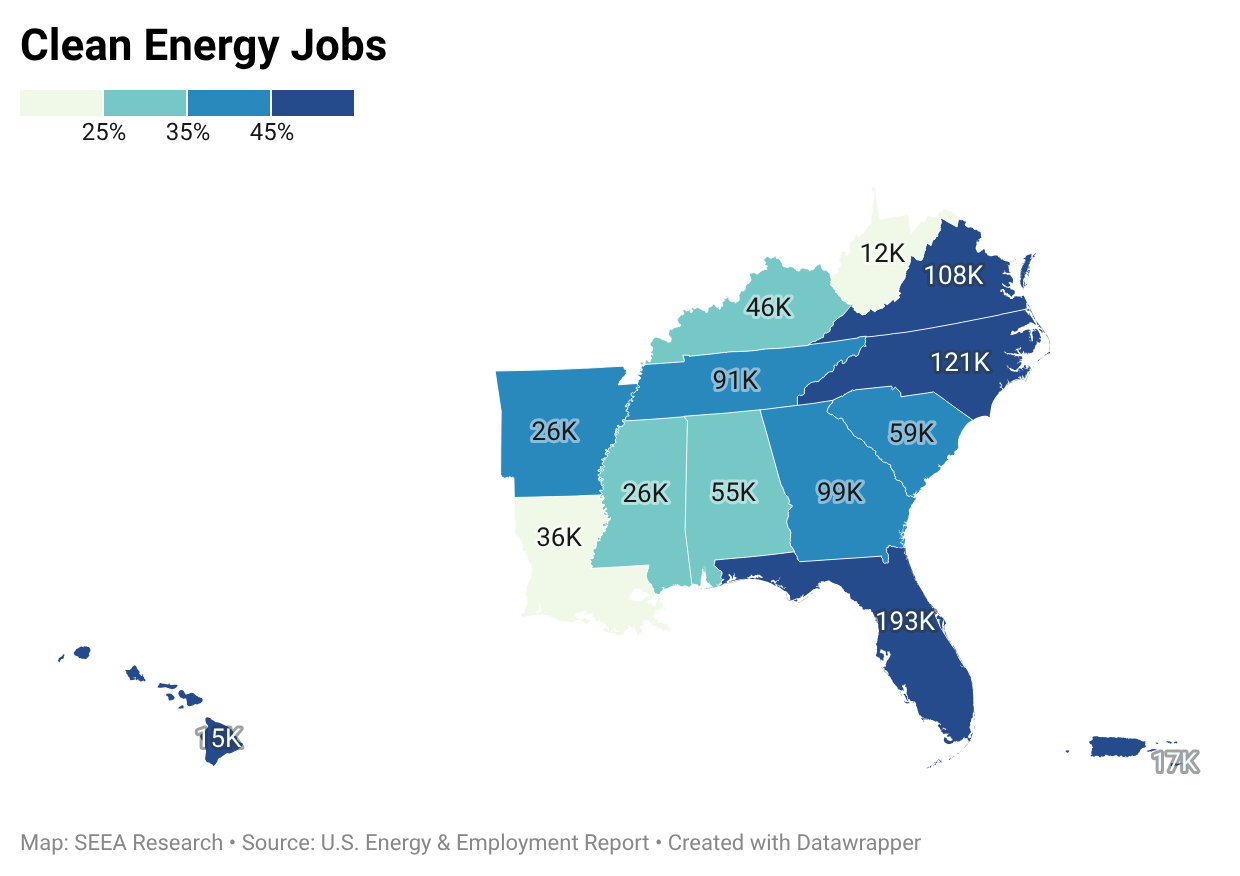
The 2025 U.S. Energy and Employment Report (USEER) and analysis in the report Clean Jobs America 2025 present the status of the energy workforce as a whole, and in the clean energy industry in particular. Based on data from the 2024 calendar year, the U.S. Energy sector employed 8.5 million workers, 2.1 million of which were in the Southeast and U.S. islands.
The median wage for energy employment is $58,810 per year, 18.8% higher than the national median wage, positioning the energy industry as a strong career choice. Clean energy jobs, including renewable power generation and fuels, alternative fuel vehicles, energy storage, electric grid innovations, and energy efficiency, form 42% of the energy workforce in these states and territories. Significant growth continued through 2024 with employers across all technologies reporting expected growth in the numbers of workers needed by the industry through 2025.
Energy efficiency roles formed 27% of the energy workforce in 2024: 394,000 jobs in the Southeast and islands. Energy efficiency is a critical partner in addressing growth in energy demand, because these innovations alleviate the need to build new power generation facilities, compensating for load growth by reducing power consumption before it is used. The American Council for an Energy-Efficient Economy (ACEEE) estimates the median cost of energy efficiency programs is $21/MWh, significantly below the cost of any other form of supplied energy, and much faster to deploy.
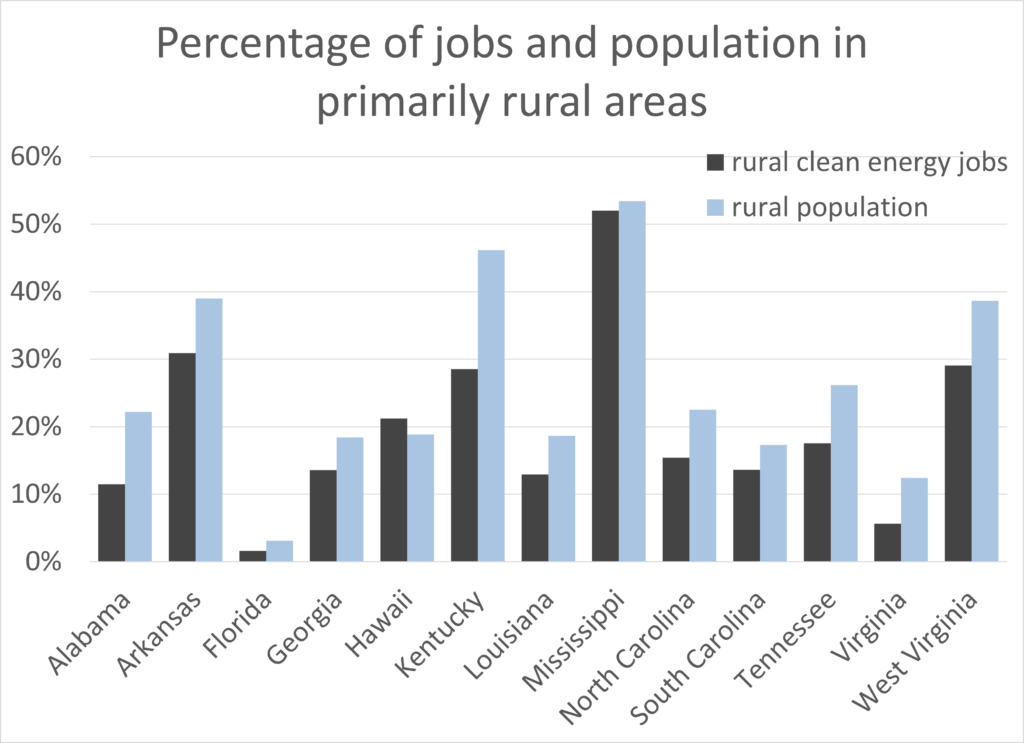
Given these benefits of energy efficiency, and for strong employment potential, how can we support a healthy workforce pipeline? 49% of employers both nationally and in this region reported that hiring was “very difficult” or “somewhat difficult.” Workforce development should include small towns and rural areas, where the portion of the general population is larger than the portion of clean energy jobs in those areas: on average, 28% of the population lives in communities that are 50% or more rural, but only 21% of the clean energy jobs are in these areas. Workforce needs can be met by training new workers, or adding professional development opportunities for existing workers, particularly in roles that are growing and needed everywhere people live, such as solar power generation, electric transmission and distribution, building efficiency, or electric vehicle charging. Having a geographically dispersed, well-trained contractor workforce increases the likelihood that employees can live closer to their jobs, while enabling energy projects to be delivered more quickly in the communities they serve. Growing enrollment in technical certificate and trade programs signals strong interest in workforce training, while highlighting the need for local outreach and supports that help students find and complete these programs.
March Map of the Month
Growth and Energy Burden in Arkansas: A County Comparison
By Laura Diaz-Villaquiran
Data: U.S. Census Bureau ACS (2020–2024); U.S. Energy Information Administration (EIA); U.S. Department of Energy LEAD Tool
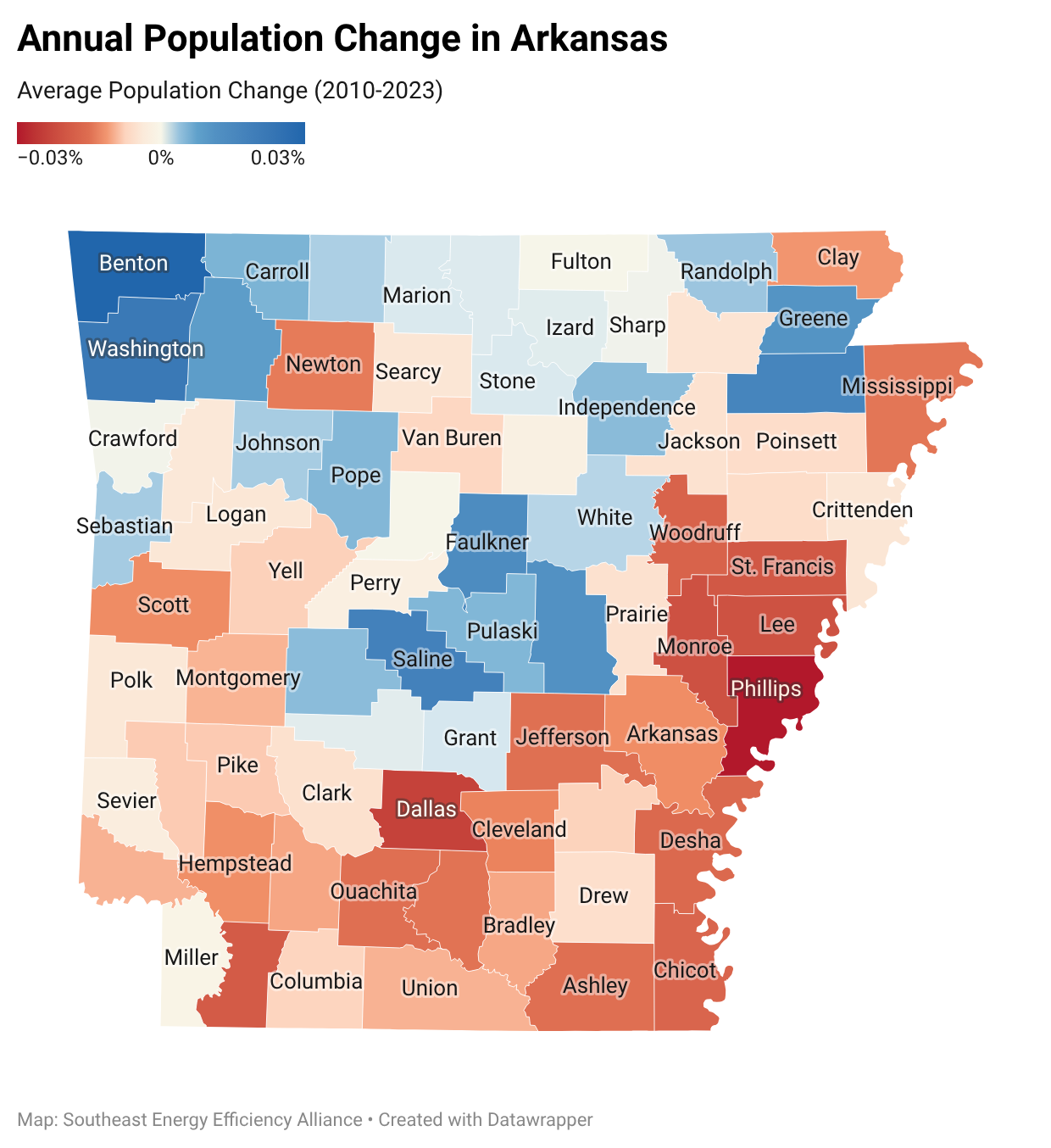
Across Arkansas, patterns of population change and energy burden are closely connected. The state consumes nearly 60% more energy than it produces, and while its electricity prices are among the ten lowest nationally, affordability varies widely depending on income, housing quality, and local economic conditions. For many low-to-moderate income households, energy costs still represent a significant share of monthly expenses.
This analysis examines how population change intersects with energy burden statewide. Communities experiencing growth generally benefit from newer housing stock, active labor markets, and expanded economic opportunity factors associated with lower energy costs relative to income. Declining communities, by contrast, often contend with shrinking economies, aging and inefficient housing, and elevated energy burdens that compound existing hardship.
A Tale of Two Counties:
In Arkansas, Benton County and Phillips County illustrate these differences. Benton County, located in northwest Arkansas, has experienced sustained growth, with a population increase of 17% between 2020 and 2025. This growth is supported by a strong labor market, with employment increasing by 7.1% between 2022 and 2023, and significant residential development, with 4,453 building permits issued in 2024.
Benton County also has a more diverse population, with 12.7% foreign-born residents and 15.8% of households speaking a language other than English at home. In Benton, the median household income is $93,506. Homeownership is relatively high at 67%, and 94.4% of households have broadband access. Median monthly housing costs include $1,717 for owners with a mortgage and $1,277 for renters.
Phillips County, located in the Mississippi Delta, presents a different picture. The county experienced a population decline of 13.7% over the same period, alongside a 5.2% decline in employment between 2022 and 2023 and only 16 building permits issued in 2024.
Phillips County is 61.8% Black, 34.5% White, and 2.5% Hispanic or Latino, with a much smaller foreign-born population than Benton County (1.5%).
In Phillips County, the median household income is $40,134, and 35.8% of residents live in poverty, over four times the rate of Benton County.
Homeownership stands at 51.2%, and 79.3% of households have broadband access. The median gross rent in Phillips is $737, reflecting lower housing costs but also lower incomes and limited economic opportunity for its residents.
Energy costs represent a disproportionately large share of income for Phillips County residents. Low-to-moderate-income households carry an average energy burden of approximately 12%, double that of Benton County. Energy poverty researchers define energy burdens of 6% to be high and burdens above 10% severe.
These differences underscore deep regional disparities in the Arkansas–Mississippi Delta, where counties such as Ashley, Chicot, Lee, and Mississippi experience a compounding cycle of population loss, elevated poverty, and severe energy burdens.
SEEA’s work focuses on these regional differences by bringing together cross-sector partners to align data, programs, and policy. Insights like these help target energy efficiency investments, inform workforce development strategies, and support solutions that improve affordability and resilience. By connecting data to action, this approach supports more consistent and measurable progress across communities in the Southeast.
February Map of the Month
By Will Bryan
Housing in the Southeast is aging, and the cost of living in it is getting more expensive. As we noted last month, around 40% of housing in the region was built before 1980, when the nation’s first minimum standards for energy efficiency were implemented. For residents of older homes, occupancy can come with an unexpected tax: the high costs of deferred maintenance and inefficiencies, not to mention the health and safety impacts of living in substandard housing.
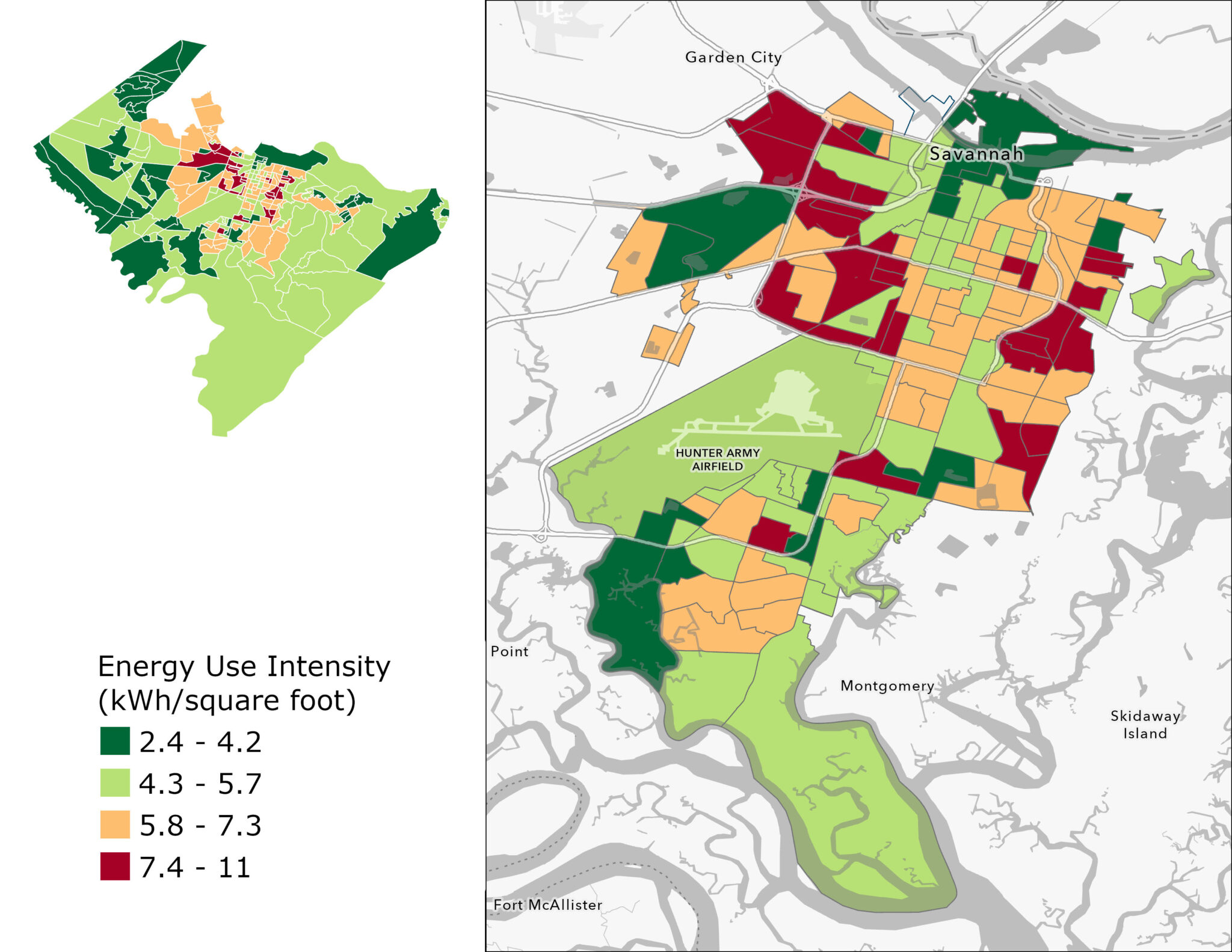
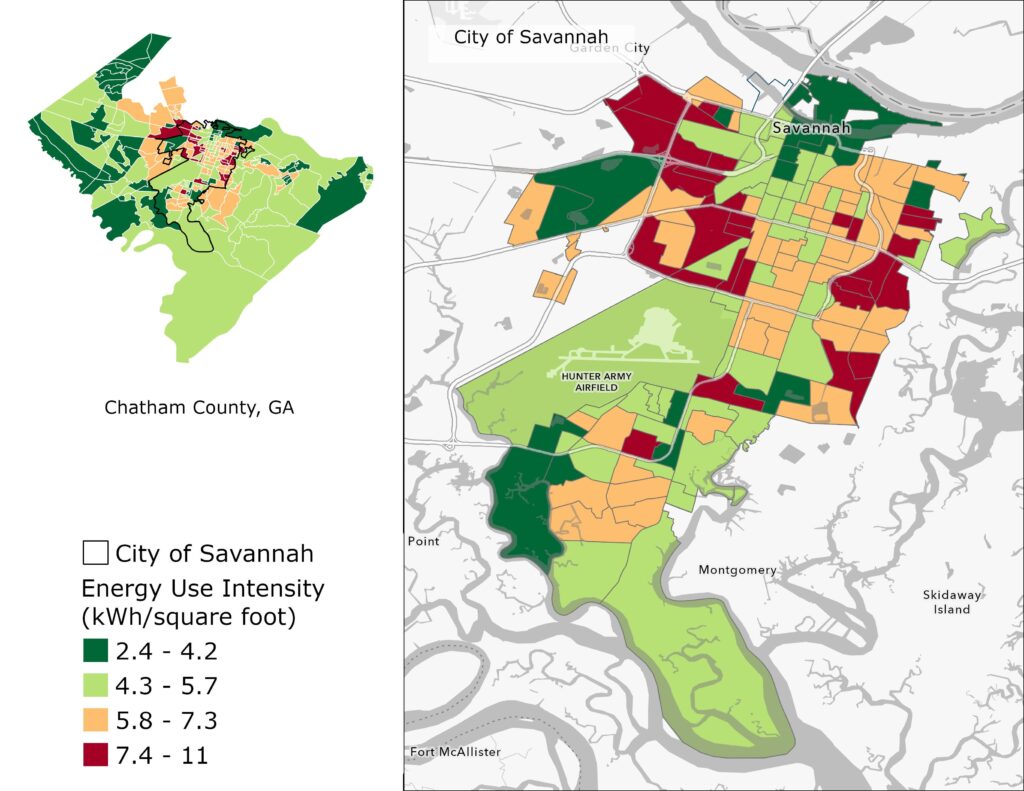
These burdens are not distributed equally. In this month’s map of the month, we assess the quality of housing in Savannah, Georgia using the metric of energy use intensity (EUI), a measure of energy use per square foot. EUI is a helpful proxy for housing quality and efficiency. Higher EUIs signal leaky buildings with heavy heating and cooling loads, while low EUIs indicate more efficient spaces. By modeling heating EUI at the census block group in Savannah, Georgia – a city where the housing stock is older than the state and regional average – we show where efficiency gaps are the widest and shed light on which communities are shouldering the impacts of our aging housing.
As the map shows, EUI varies considerably across the City of Savannah. The most efficient households in the city use more than 4.5 times less energy per square foot than the least efficient households in the city, which translates into considerable monthly cost savings.
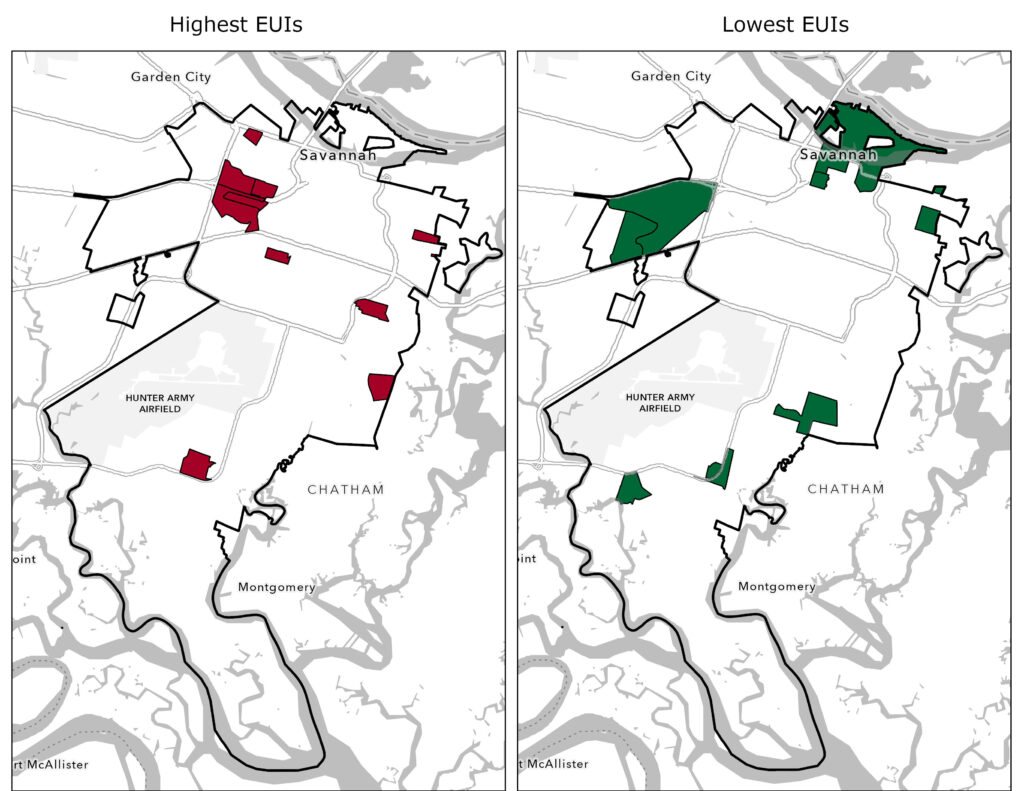
The highest EUIs are concentrated on the outskirts of the historic district. While the housing here is nearly as old as that in the city’s core, these neighborhoods have had fewer resources available for retrofits and upgrades. The result is that it is less likely that homes in these areas have been retrofitted and they are more likely to experience the impacts of deferred maintenance.
In Savannah, these issues are shaped by the legacies of the South’s long history of residential segregation. As the chart below indicates, block groups in the city with the highest EUIs all have majority Black populations, while census block groups with the lowest EUIs are all majority white. Additionally, homes in areas with low EUIs tend to be newer than the typical home, benefiting from modern construction techniques and minimum standards for building efficiency. This showcases the ways that segregation, a lack of housing choice, and unequal access to capital over the past century continue to circumscribe who has access to healthy and efficient housing today.

January Map of the Month
Aging Homes, Rising Energy Costs
By Amy Lovell, Ph.D.
Escalating household energy costs have increased the urgency of energy and housing affordability and drawn attention to the influence of housing characteristics on energy efficiency. Housing age is a major driver of home energy usage and costs, particularly if the home was constructed to lower building standards or is in need of major repairs. In 2020, 27% of households across the U.S. struggled to meet energy needs, and in some areas, that percentage is even higher.
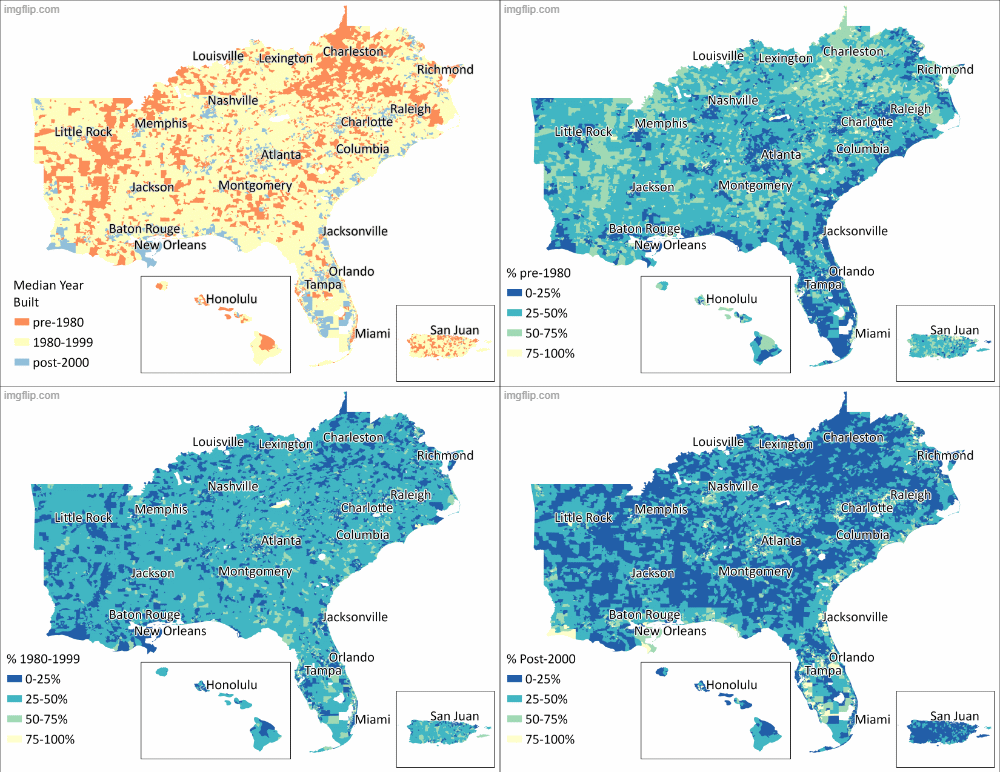
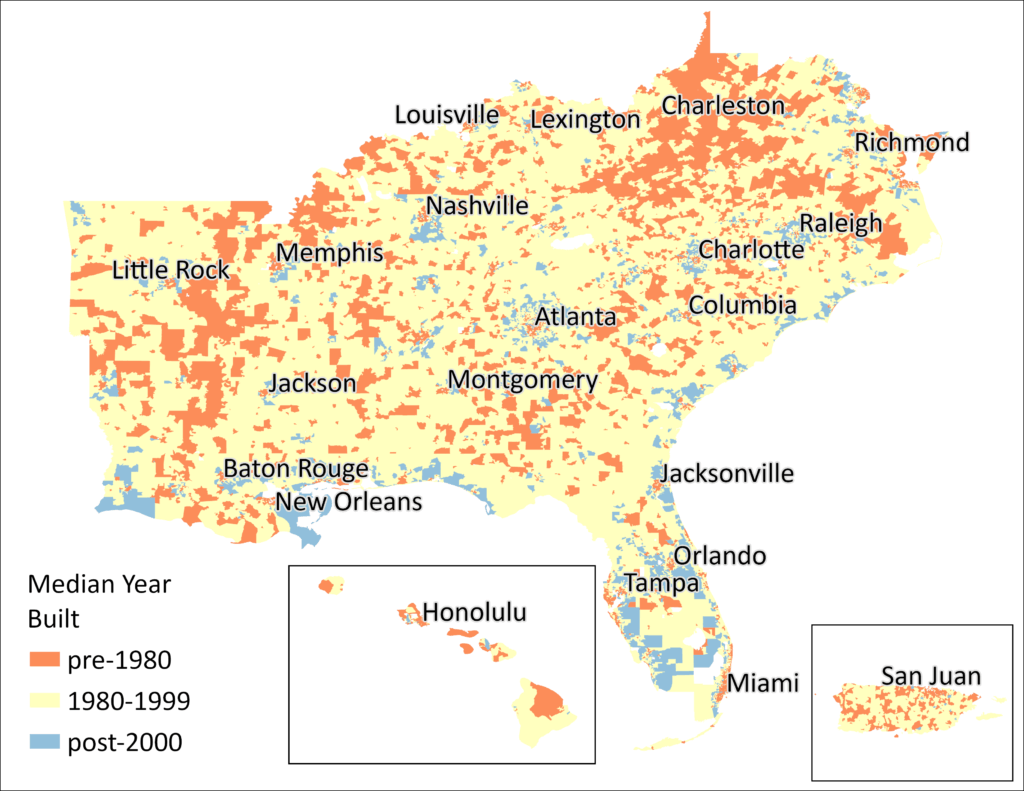
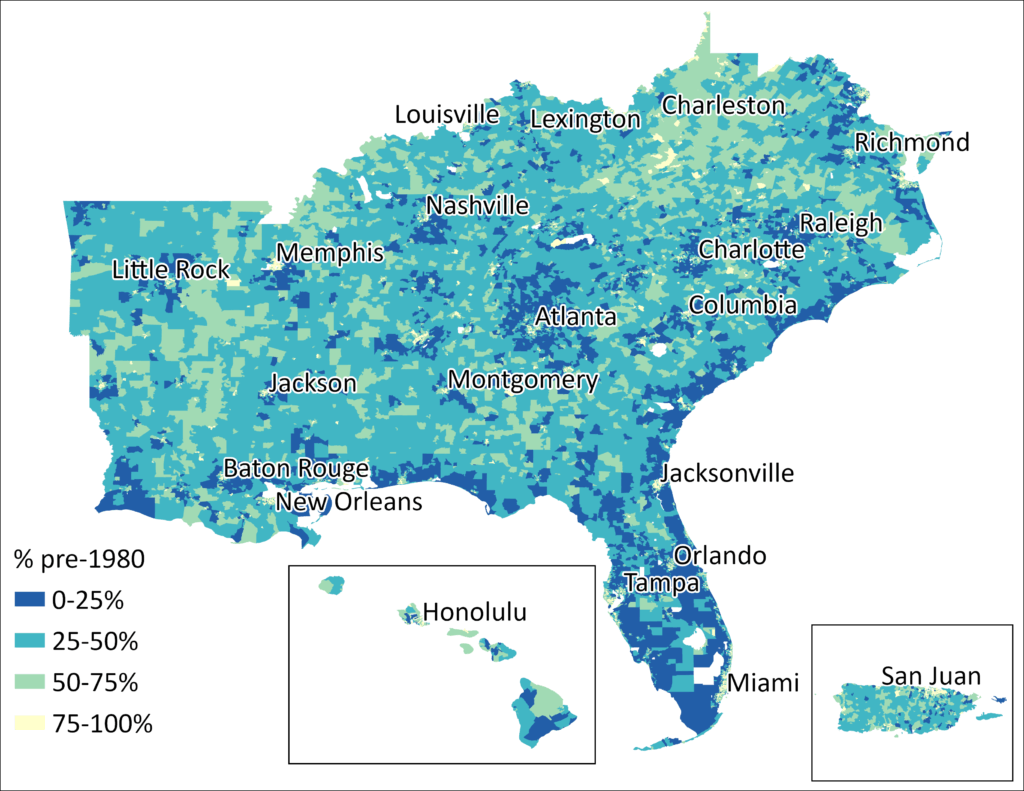
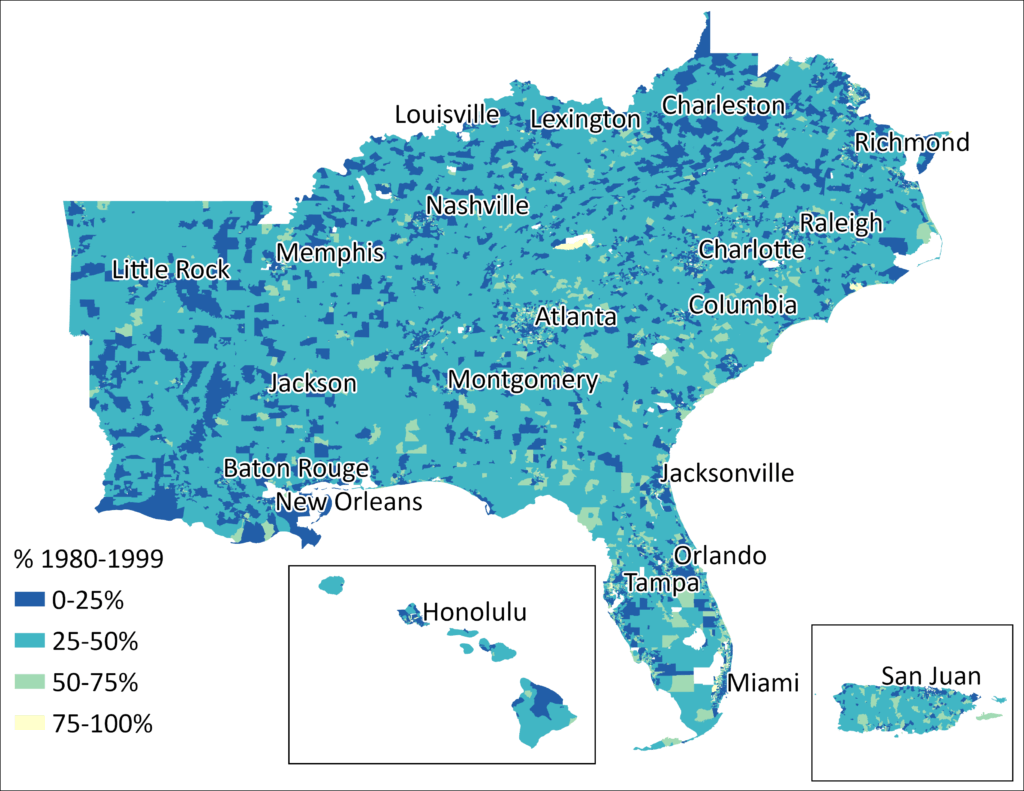
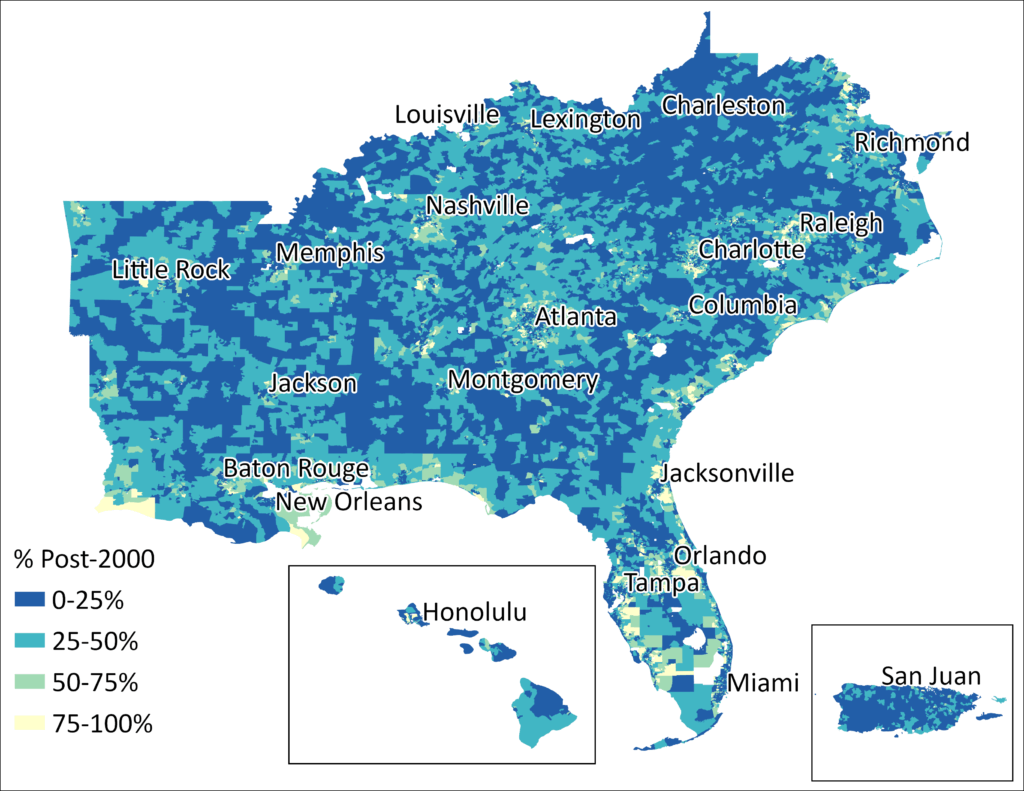
One of the most critical factors influencing the efficiency of housing is the year of construction, as building technologies and code requirements have evolved over time. In the Southeast, approximately 40% of homes were built before 1980, when energy codes started to be required in some jurisdictions nationally. Though only 5% of homes were built in 1939 or earlier, and 14.8% of homes were built before 1960, this still represents 1.9 million and 6 million residences, respectively. Less than 30% of southeastern homes were built after the year 2000.
This month’s map illustrates the percentages of southeastern homes that were built over different time spans, and the median year of construction. Data are estimated at the census tract level, representing 40 million homes in the region, based on the U.S. Census Bureau’s American Community Survey (ACS) from 2023.
Rural areas tend to have a higher proportion of older homes (indicated on the map in darker shades of blue), while areas near cities that have experienced significant growth tend to have a higher proportion of newer homes (indicated in lighter green and yellow). In some rural communities, 40% or more of the homes were first constructed before 1960. Unless those homes have been renovated or had intentional upgrades to energy efficiency, the residents likely experience high energy costs.
For an older home, a comprehensive energy efficiency upgrade – which may include sealing air leaks around doors and windows, adding additional attic or wall insulation, replacing windows or doors, or upgrading heating/cooling systems and thermostats – can save 10-30% on annual energy costs. It is useful for states, counties, and municipalities to know where the majority of residents are living in older homes that could benefit from some attention.
While new construction will typically be built to comply with greater energy efficiency standards, those requirements vary across the region. In Florida, Louisiana, and Virginia, the building energy codes are more favorable to efficient new construction, while in some other states in the region, building standards are 15-20 years behind the most modern standards. The U.S. Department of Energy determined that upgrading building energy codes to the most recent (2024) International Energy Conservation Code (IECC) would result in 7-8% in residential energy savings over the 2021 code, and upgrading older codes holds even greater potential, but only for newly constructed homes.
Older homes may have undergone significant renovations and upgrades to energy efficiency, either as older components were replaced after failure, or in a more comprehensive upgrade targeting energy savings. As a result, many newer homes will operate more efficiently and cost less in annual energy expenditures, but older homes of any age may be much more efficient than others of the same vintage. Home renovation is a major industry, including do-it-yourself and professionally-installed projects (including but not limited to energy upgrades), with total homeowner remodeling spending expected to exceed $500 billion in 2026.
An additional challenge for residents of older homes, particularly for families with limited financial resources, very high energy costs, or significant deferred maintenance projects in the home, is the additional cost of repairing existing damage and preparing the home to benefit from energy efficiency improvements. As increasing energy demand influences household energy costs across the region and the nation, the number of households paying more than 10% of their income on energy bills will continue to grow from the current 12%. National, state, utility, local, and philanthropic funding programs are working to fill these gaps, but in most locations the need greatly exceeds the available funds. For example, SEEA is conducting a pilot program with microgrants to help nonprofits, small businesses, and municipalities who are supporting residents in applying for these programs in five states. States and municipalities can also continue to review and update their building energy codes so that newer housing can operate as efficiently as possible.
November Map of the Month
By Will Bryan

It’s no secret that projected electric loads throughout the nation are unprecedented, but particularly in the Southeast. A recent analysis by ICF estimates that U.S. electricity demand will grow by 25% in the next four years, and 78% by 2050, compared to a 2023 baseline. Much of this load growth will happen in the Southeast, driven by a combination of electrification and the siting of large commercial customers.
Many electric utilities are considering building new generation to manage this unprecedented growth; load flexibility, however, will be a critical tool to maintain grid stability, promote customer affordability, reduce the environmental impacts of generation, and ensure that we have the energy to meet all our needs.
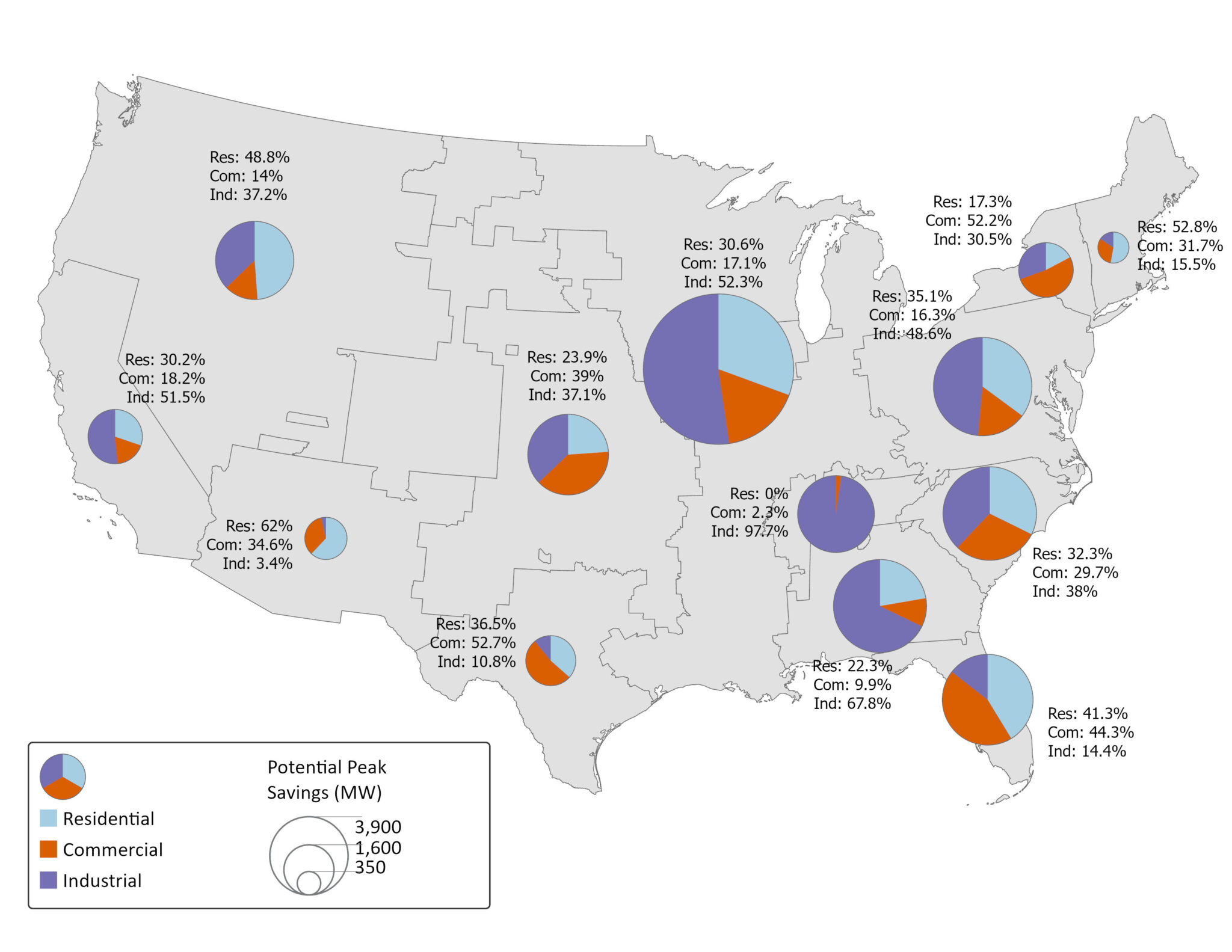
This month’s map uses data from the U.S. Energy Information Administration (EIA) to explore the state of utility-administered demand response programs in 2024, the most recent year data was available. Demand response refers to a range of programs that are designed to reduce customer usage during peak events, including through the installation of smart thermostats or variable pricing, among others.
Utilities of all types have enrolled 2.7 million residential, commercial, and industrial customers in demand response programs across the South. These programs have created the capacity to save approximately 13.34 GW of peak energy use. In 2024, demand response reduced the peak demand by 2.89 GW, the amount of power generated by about three nuclear reactors. Utilities in the Midwest, mid-Atlantic, Carolinas, and Southeast balancing authority regions lead the nation in terms of potential peak capacity reductions available through demand response programs.
As the pie charts in this month’s map show, utilities take different approaches to balancing their programs across multiple sectors. While peak savings in the Southern and Tennessee balancing authority regions are driven largely by the industrial sectors (seen in purple on the pie chart), other parts of the South, such as Florida and the Carolinas, show a greater reliance on residential and commercial demand response approaches.
Demand response is transformational work. It stabilizes the grid during critical events and protects customers from the costs of new infrastructure investment. However, to meet future load projections, these programs must be scaled up rapidly to help meet the projected need.
Expanding demand response offers additional peak-shaving capability, especially when paired with energy efficiency and other distributed energy resources. Demand response is a proven, effective tool. The challenge now is to scale it to meet the emerging demand.