
April Map of the Month
By: Amy Lovell
Energy Efficiency Workforce Needed to Meet Growing Energy Demand
Energy demand is growing across the U.S., driven by new and larger data centers, energy-intensive manufacturing, and electrification of homes, businesses, and vehicles. While the electric grid and power generation facilities must expand to meet that need, power demand can also be managed through energy efficiency solutions. These are time-tested approaches, and significant load reductions can result from reducing system losses, deploying more efficient technologies, optimizing processes, and making strategic energy‑use decisions. Whether it is infrastructure expansion or demand side management, all approaches to meet energy demand require growth in the workforce across the growing energy sectors.
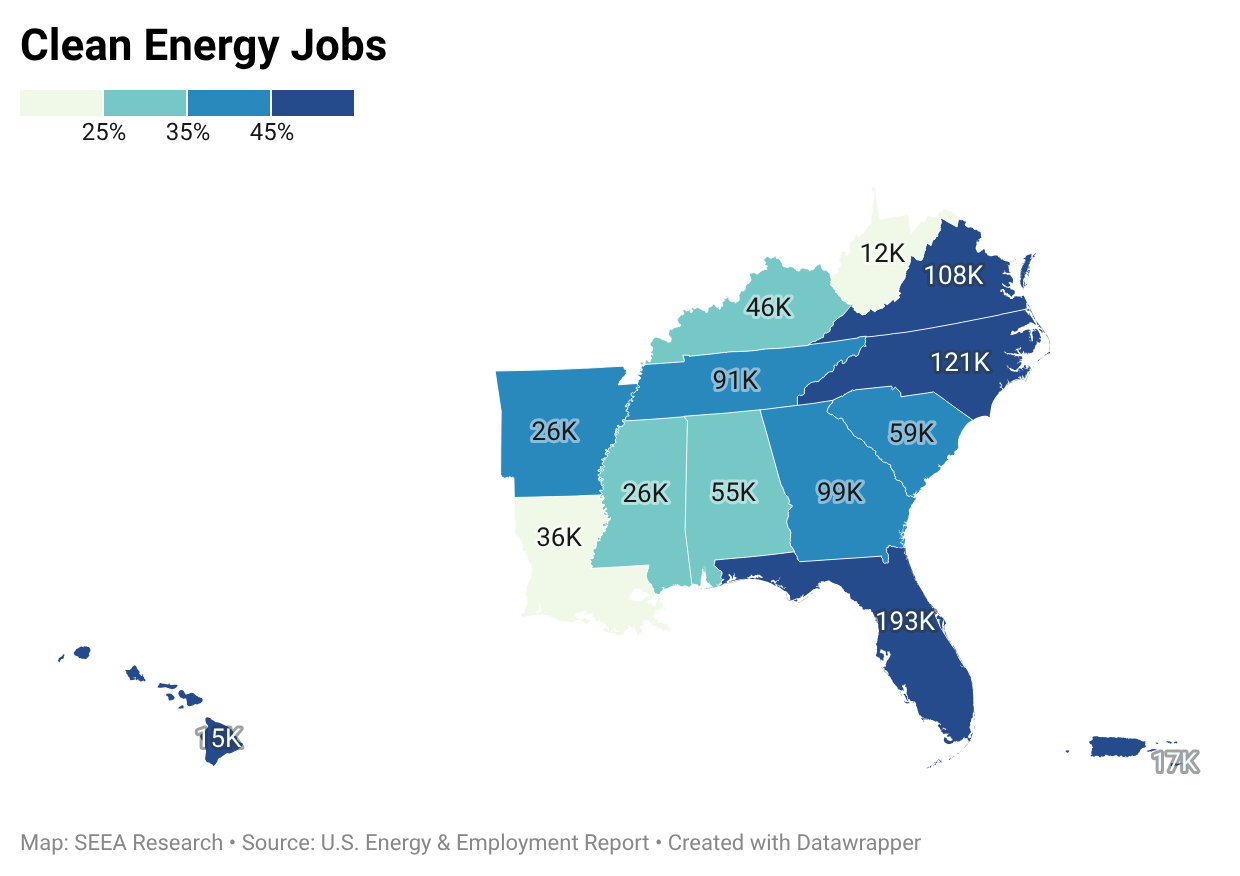
The 2025 U.S. Energy and Employment Report (USEER) and analysis in the report Clean Jobs America 2025 present the status of the energy workforce as a whole, and in the clean energy industry in particular. Based on data from the 2024 calendar year, the U.S. Energy sector employed 8.5 million workers, 2.1 million of which were in the Southeast and U.S. islands.
The median wage for energy employment is $58,810 per year, 18.8% higher than the national median wage, positioning the energy industry as a strong career choice. Clean energy jobs, including renewable power generation and fuels, alternative fuel vehicles, energy storage, electric grid innovations, and energy efficiency, form 42% of the energy workforce in these states and territories. Significant growth continued through 2024 with employers across all technologies reporting expected growth in the numbers of workers needed by the industry through 2025.
Energy efficiency roles formed 27% of the energy workforce in 2024: 394,000 jobs in the Southeast and islands. Energy efficiency is a critical partner in addressing growth in energy demand, because these innovations alleviate the need to build new power generation facilities, compensating for load growth by reducing power consumption before it is used. The American Council for an Energy-Efficient Economy (ACEEE) estimates the median cost of energy efficiency programs is $21/MWh, significantly below the cost of any other form of supplied energy, and much faster to deploy.
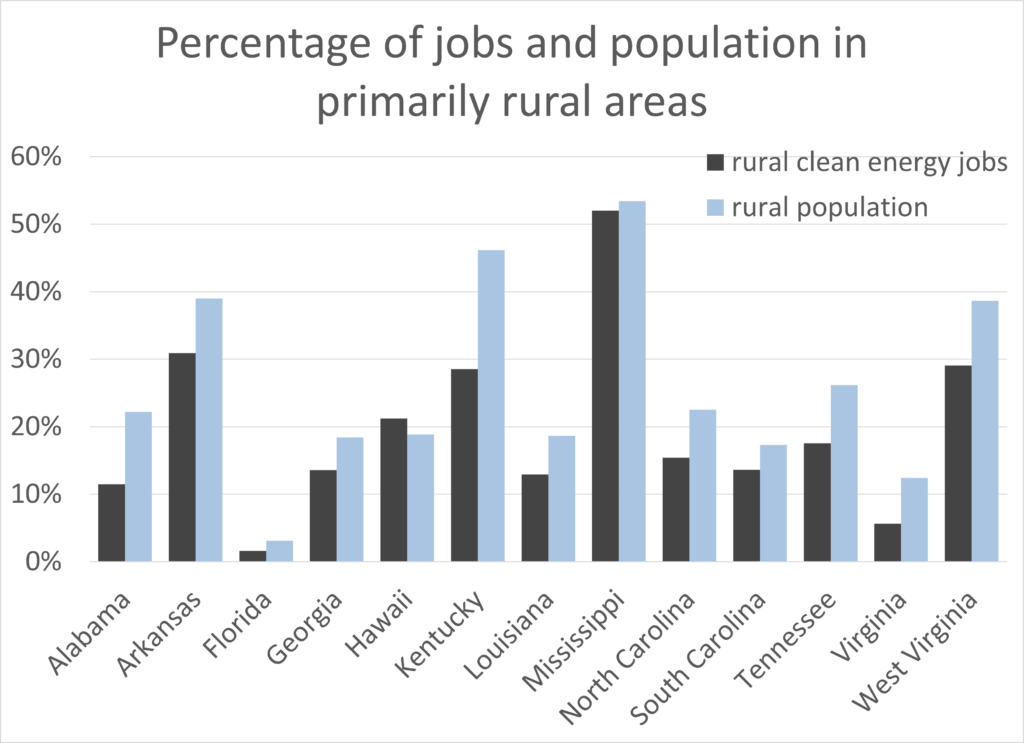
Given these benefits of energy efficiency, and for strong employment potential, how can we support a healthy workforce pipeline? 49% of employers both nationally and in this region reported that hiring was “very difficult” or “somewhat difficult.” Workforce development should include small towns and rural areas, where the portion of the general population is larger than the portion of clean energy jobs in those areas: on average, 28% of the population lives in communities that are 50% or more rural, but only 21% of the clean energy jobs are in these areas. Workforce needs can be met by training new workers, or adding professional development opportunities for existing workers, particularly in roles that are growing and needed everywhere people live, such as solar power generation, electric transmission and distribution, building efficiency, or electric vehicle charging. Having a geographically dispersed, well-trained contractor workforce increases the likelihood that employees can live closer to their jobs, while enabling energy projects to be delivered more quickly in the communities they serve. Growing enrollment in technical certificate and trade programs signals strong interest in workforce training, while highlighting the need for local outreach and supports that help students find and complete these programs.