
Month: January 2026
January Map of the Month
Aging Homes, Rising Energy Costs
By Amy Lovell, Ph.D.
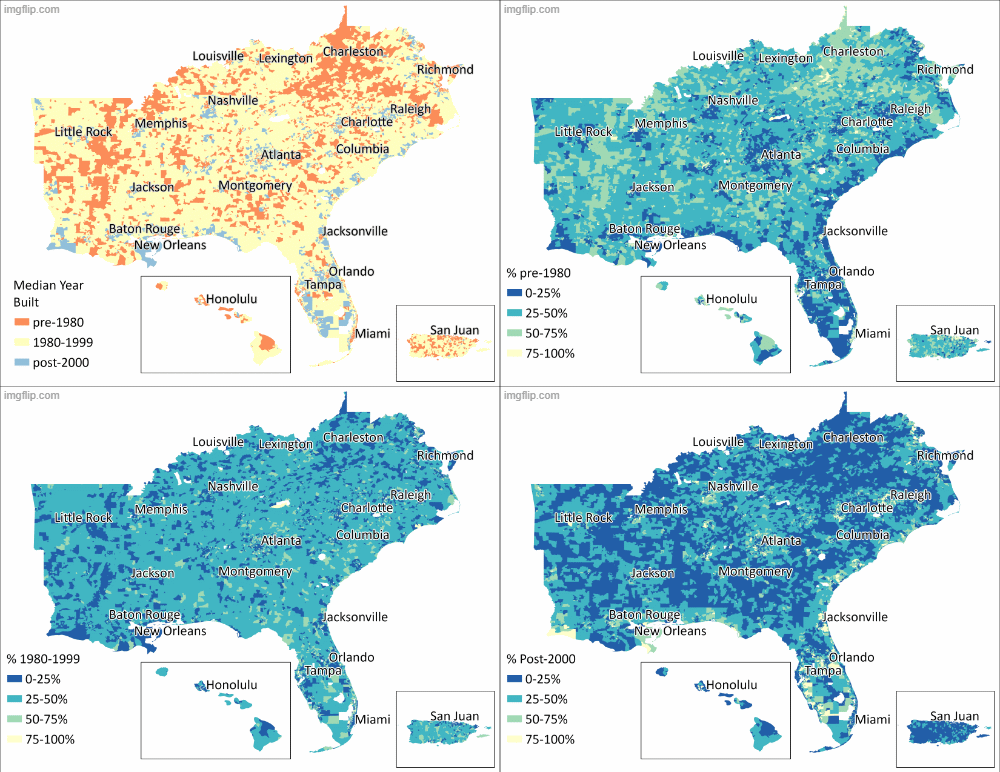
Escalating household energy costs have increased the urgency of energy and housing affordability and drawn attention to the influence of housing characteristics on energy efficiency. Housing age is a major driver of home energy usage and costs, particularly if the home was constructed to lower building standards or is in need of major repairs. In 2020, 27% of households across the U.S. struggled to meet energy needs, and in some areas, that percentage is even higher.
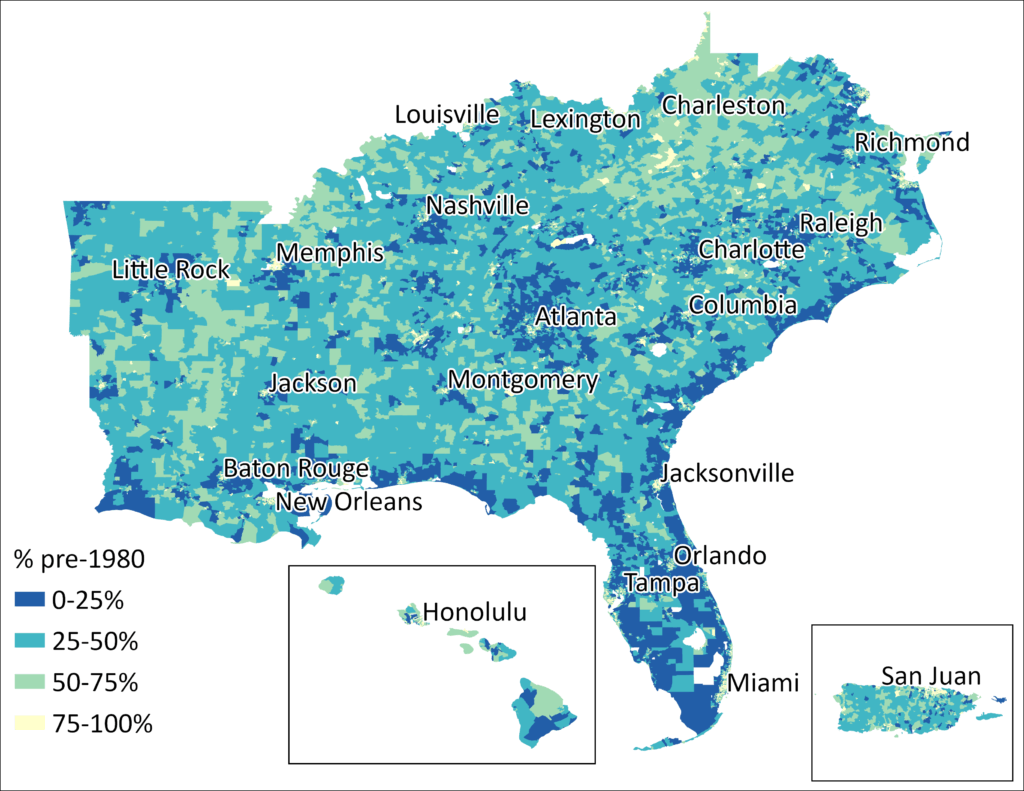
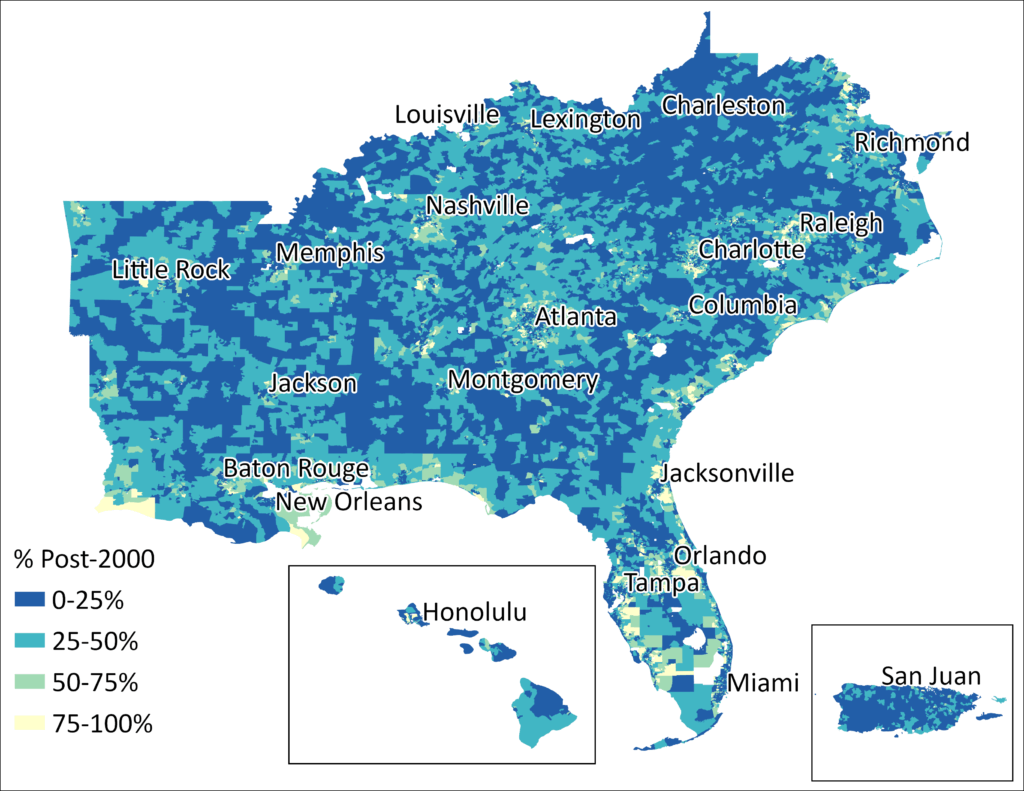
One of the most critical factors influencing the efficiency of housing is the year of construction, as building technologies and code requirements have evolved over time. In the Southeast, approximately 40% of homes were built before 1980, when energy codes started to be required in some jurisdictions nationally. Though only 5% of homes were built in 1939 or earlier, and 14.8% of homes were built before 1960, this still represents 1.9 million and 6 million residences, respectively. Less than 30% of southeastern homes were built after the year 2000.
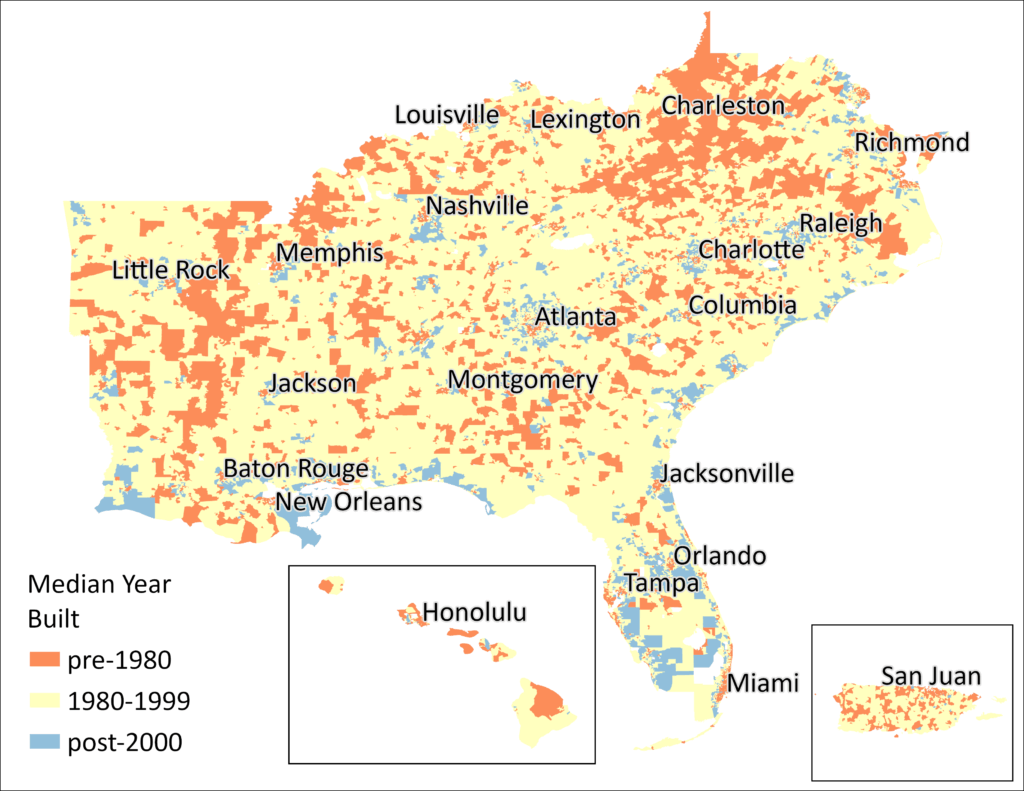
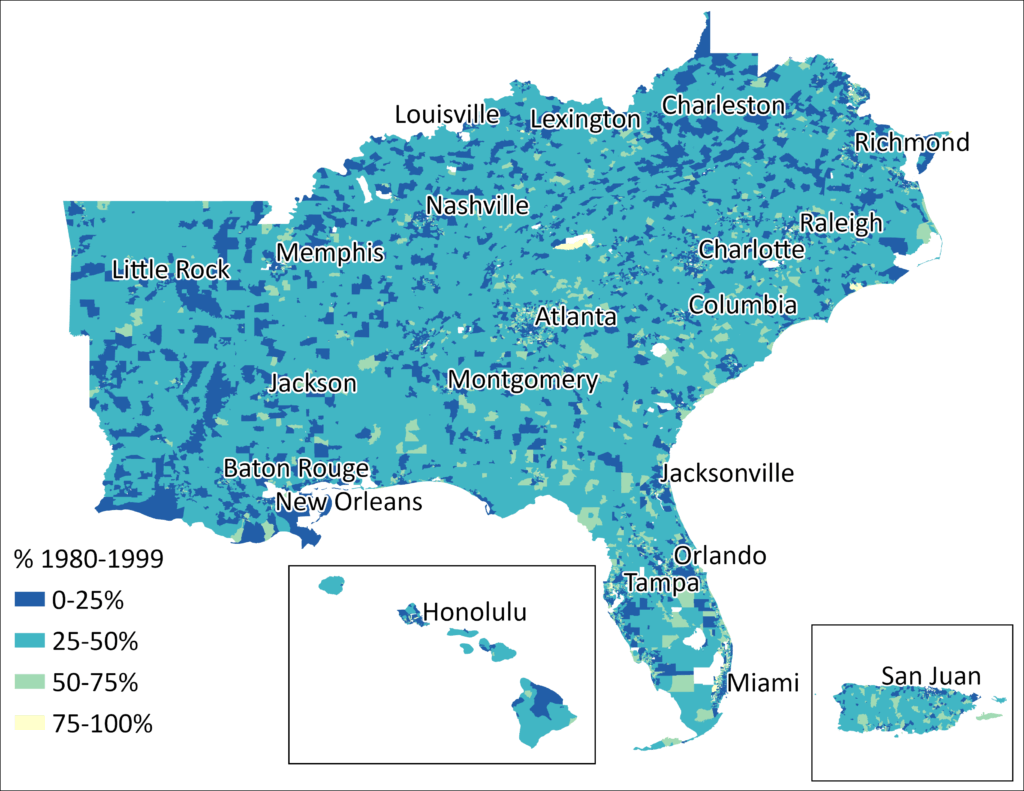
This month’s map illustrates the percentages of southeastern homes that were built over different time spans, and the median year of construction. Data are estimated at the census tract level, representing 40 million homes in the region, based on the U.S. Census Bureau’s American Community Survey (ACS) from 2023.
Rural areas tend to have a higher proportion of older homes (indicated on the map in darker shades of blue), while areas near cities that have experienced significant growth tend to have a higher proportion of newer homes (indicated in lighter green and yellow). In some rural communities, 40% or more of the homes were first constructed before 1960. Unless those homes have been renovated or had intentional upgrades to energy efficiency, the residents likely experience high energy costs.
For an older home, a comprehensive energy efficiency upgrade – which may include sealing air leaks around doors and windows, adding additional attic or wall insulation, replacing windows or doors, or upgrading heating/cooling systems and thermostats – can save 10-30% on annual energy costs. It is useful for states, counties, and municipalities to know where the majority of residents are living in older homes that could benefit from some attention.
While new construction will typically be built to comply with greater energy efficiency standards, those requirements vary across the region. In Florida, Louisiana, and Virginia, the building energy codes are more favorable to efficient new construction, while in some other states in the region, building standards are 15-20 years behind the most modern standards. The U.S. Department of Energy determined that upgrading building energy codes to the most recent (2024) International Energy Conservation Code (IECC) would result in 7-8% in residential energy savings over the 2021 code, and upgrading older codes holds even greater potential, but only for newly constructed homes.
Older homes may have undergone significant renovations and upgrades to energy efficiency, either as older components were replaced after failure, or in a more comprehensive upgrade targeting energy savings. As a result, many newer homes will operate more efficiently and cost less in annual energy expenditures, but older homes of any age may be much more efficient than others of the same vintage. Home renovation is a major industry, including do-it-yourself and professionally-installed projects (including but not limited to energy upgrades), with total homeowner remodeling spending expected to exceed $500 billion in 2026.
An additional challenge for residents of older homes, particularly for families with limited financial resources, very high energy costs, or significant deferred maintenance projects in the home, is the additional cost of repairing existing damage and preparing the home to benefit from energy efficiency improvements. As increasing energy demand influences household energy costs across the region and the nation, the number of households paying more than 10% of their income on energy bills will continue to grow from the current 12%. National, state, utility, local, and philanthropic funding programs are working to fill these gaps, but in most locations the need greatly exceeds the available funds. For example, SEEA is conducting a pilot program with microgrants to help nonprofits, small businesses, and municipalities who are supporting residents in applying for these programs in five states. States and municipalities can also continue to review and update their building energy codes so that newer housing can operate as efficiently as possible.