
February Map of the Month
By Will Bryan
Housing in the Southeast is aging, and the cost of living in it is getting more expensive. As we noted last month, around 40% of housing in the region was built before 1980, when the nation’s first minimum standards for energy efficiency were implemented. For residents of older homes, occupancy can come with an unexpected tax: the high costs of deferred maintenance and inefficiencies, not to mention the health and safety impacts of living in substandard housing.
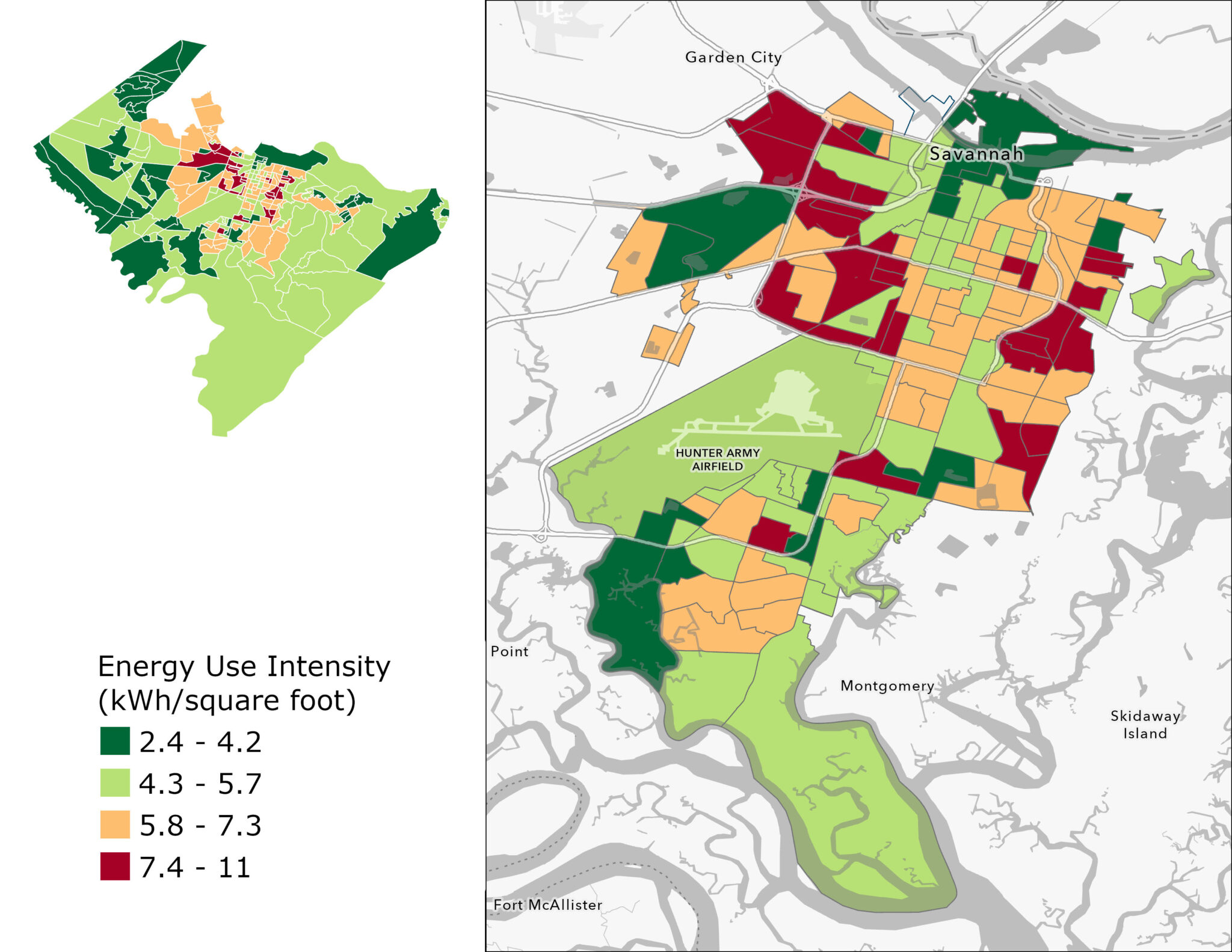
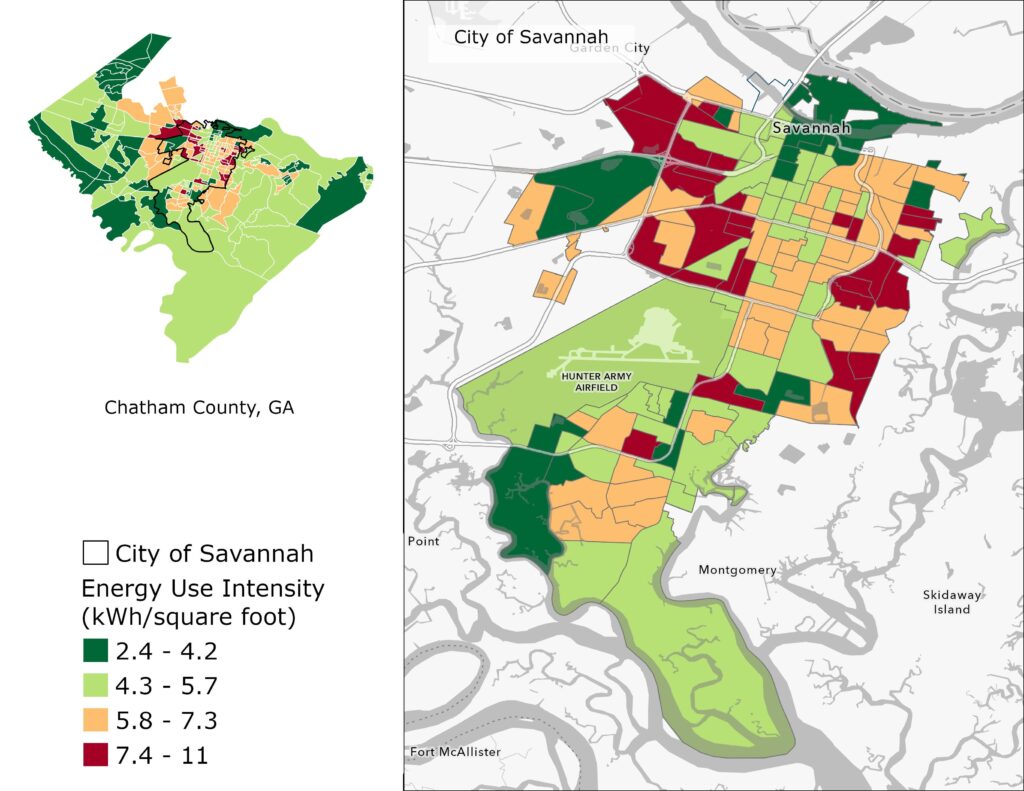
These burdens are not distributed equally. In this month’s map of the month, we assess the quality of housing in Savannah, Georgia using the metric of energy use intensity (EUI), a measure of energy use per square foot. EUI is a helpful proxy for housing quality and efficiency. Higher EUIs signal leaky buildings with heavy heating and cooling loads, while low EUIs indicate more efficient spaces. By modeling heating EUI at the census block group in Savannah, Georgia – a city where the housing stock is older than the state and regional average – we show where efficiency gaps are the widest and shed light on which communities are shouldering the impacts of our aging housing.
As the map shows, EUI varies considerably across the City of Savannah. The most efficient households in the city use more than 4.5 times less energy per square foot than the least efficient households in the city, which translates into considerable monthly cost savings.
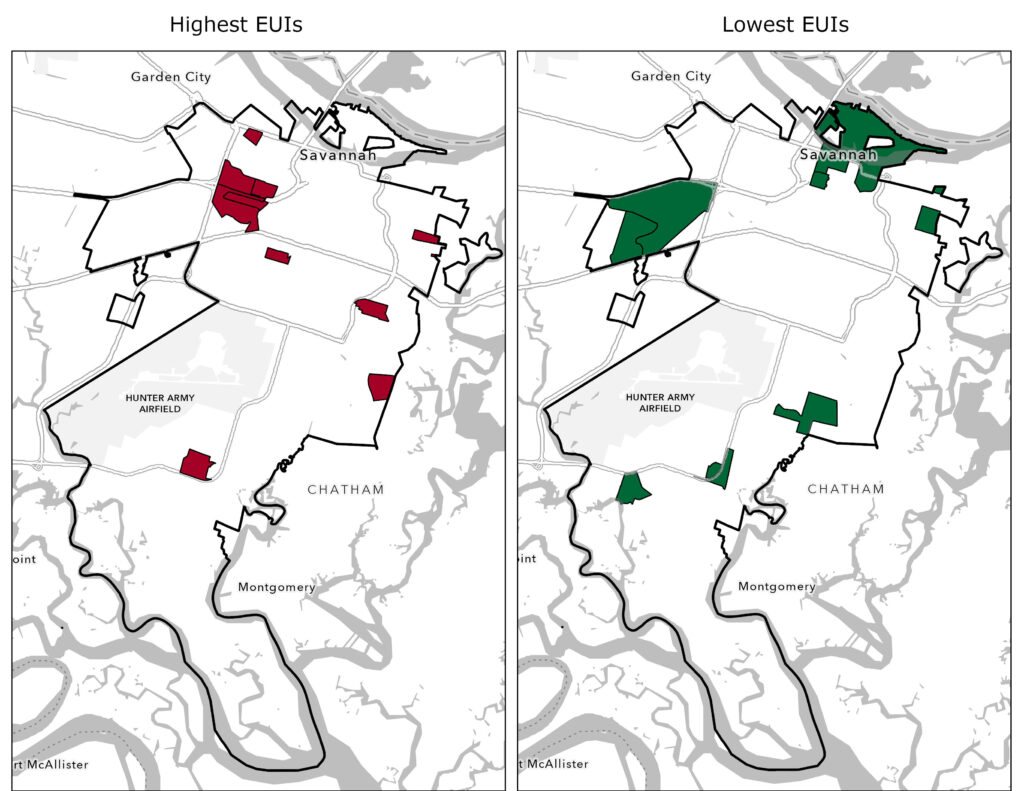
The highest EUIs are concentrated on the outskirts of the historic district. While the housing here is nearly as old as that in the city’s core, these neighborhoods have had fewer resources available for retrofits and upgrades. The result is that it is less likely that homes in these areas have been retrofitted and they are more likely to experience the impacts of deferred maintenance.
In Savannah, these issues are shaped by the legacies of the South’s long history of residential segregation. As the chart below indicates, block groups in the city with the highest EUIs all have majority Black populations, while census block groups with the lowest EUIs are all majority white. Additionally, homes in areas with low EUIs tend to be newer than the typical home, benefiting from modern construction techniques and minimum standards for building efficiency. This showcases the ways that segregation, a lack of housing choice, and unequal access to capital over the past century continue to circumscribe who has access to healthy and efficient housing today.