

Category: Map of the Month
Map of the Month – February
William D. Bryan, Ph.D. & Joy Ward
Map: Southeast Energy Efficiency Alliance.
In honor of Black History Month, our February map pays homage to David Crosthwait, a Black engineer and inventor who designed heating, ventilation and air conditioning systems. One of his greatest contributions was developing heating systems for Rockefeller Center and Radio City Music Hall in New York. Today he is remembered for holding 39 patents that addressed a range of heating and ventilation problems. In 1971, he became the first Black person named a fellow of the American Society of Heating, Refrigeration, and Air Conditioning Engineers.
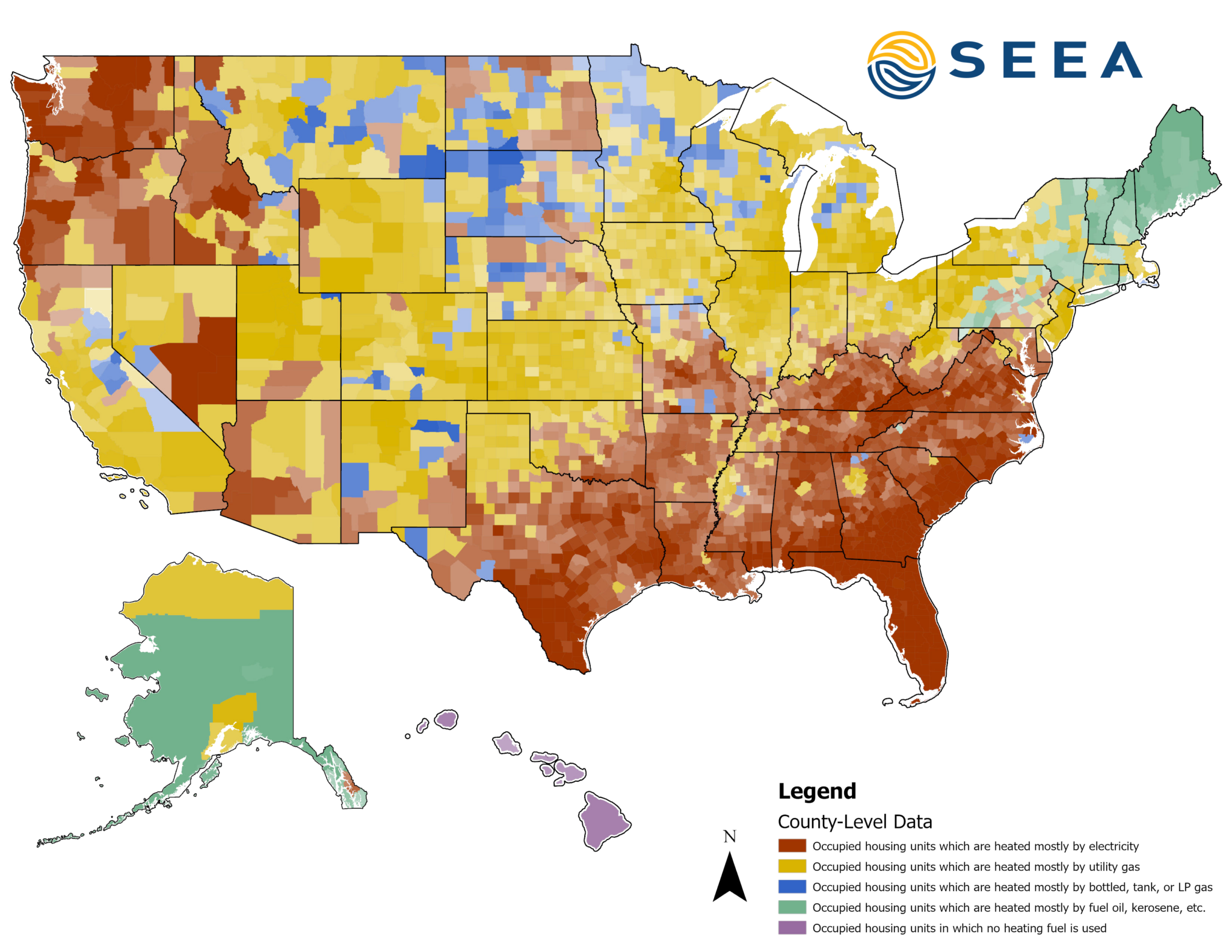
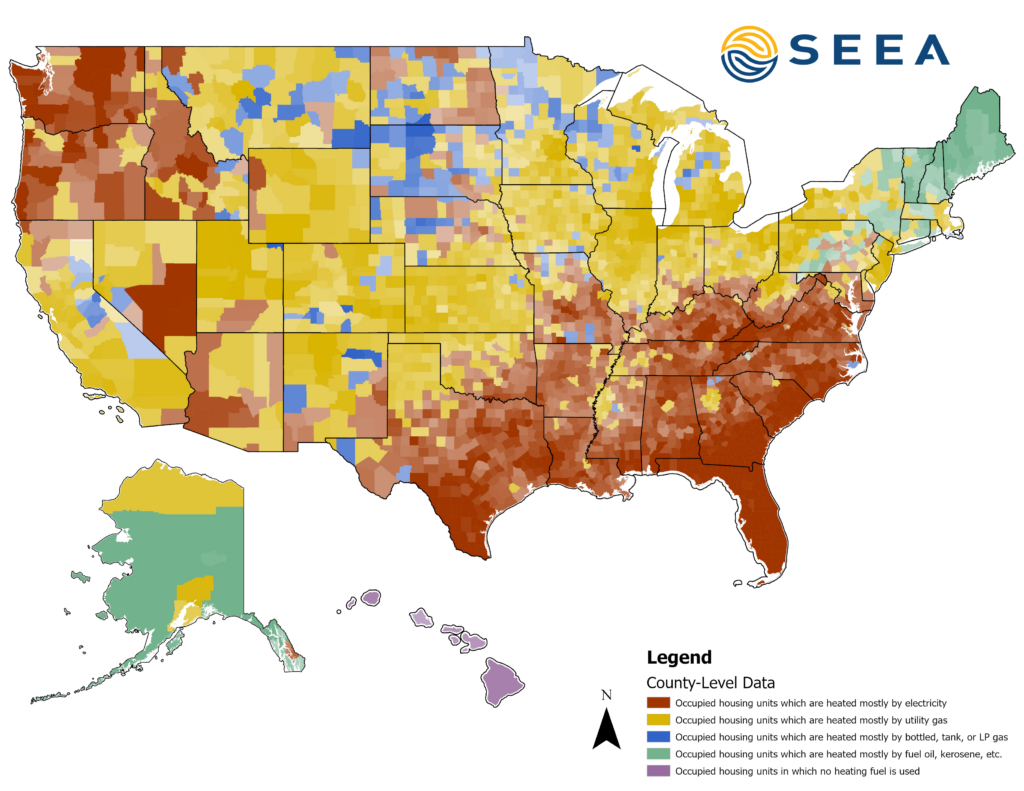
This month’s map visualizes the type of heating fuel households use at the county level across the United States for occupied housing units. It was created using data from the American Community Survey conducted by the U.S. Census Bureau.
Nationwide, most people rely on utility gas or electricity to heat their homes. Forty-seven percent of households use utility gas to fuel their heating equipment, while 39% use electricity. The remaining fuel types, bottled tank and fuel oil, are common in the Midwest and Northeast, respectively. In the South, electricity is most common with 68% of households using it as a source of heat, while just a quarter use utility gas.
One reason why the South has a high percentage of electricity use is because our region has a lower heating load and electric utilities have led successful heat pump installation programs. Despite this, urban centers such as Atlanta, Birmingham, Little Rock, Louisville, and Memphis predominately use utility gas. While this map suggests that the South is heavily electric, there are still millions of households in the Southeast that are eligible for the electric appliance tax credits and rebates available through the Inflation Reduction Act. These incentives can reduce the cost of energy efficient appliances like electric heat pumps, which are well-suited to the needs of Southern homes and dramatically reduce household energy consumption.
On March 15 at 2 p.m., hear from regional experts about how we can leverage federal funding to help low-income renters access energy efficient technology for their homes. Register for How to Make Clean Energy Upgrades More Accessible to Renters today.
Map of the Month – January
William D. Bryan, Ph.D. & Joy Ward
We are excited to introduce a new addition to SEEA’s blog this year – the Map of the Month. Every month, our research team will share a map that explores energy efficiency in the Southeast.
Map: Southeast Energy Efficiency Alliance.
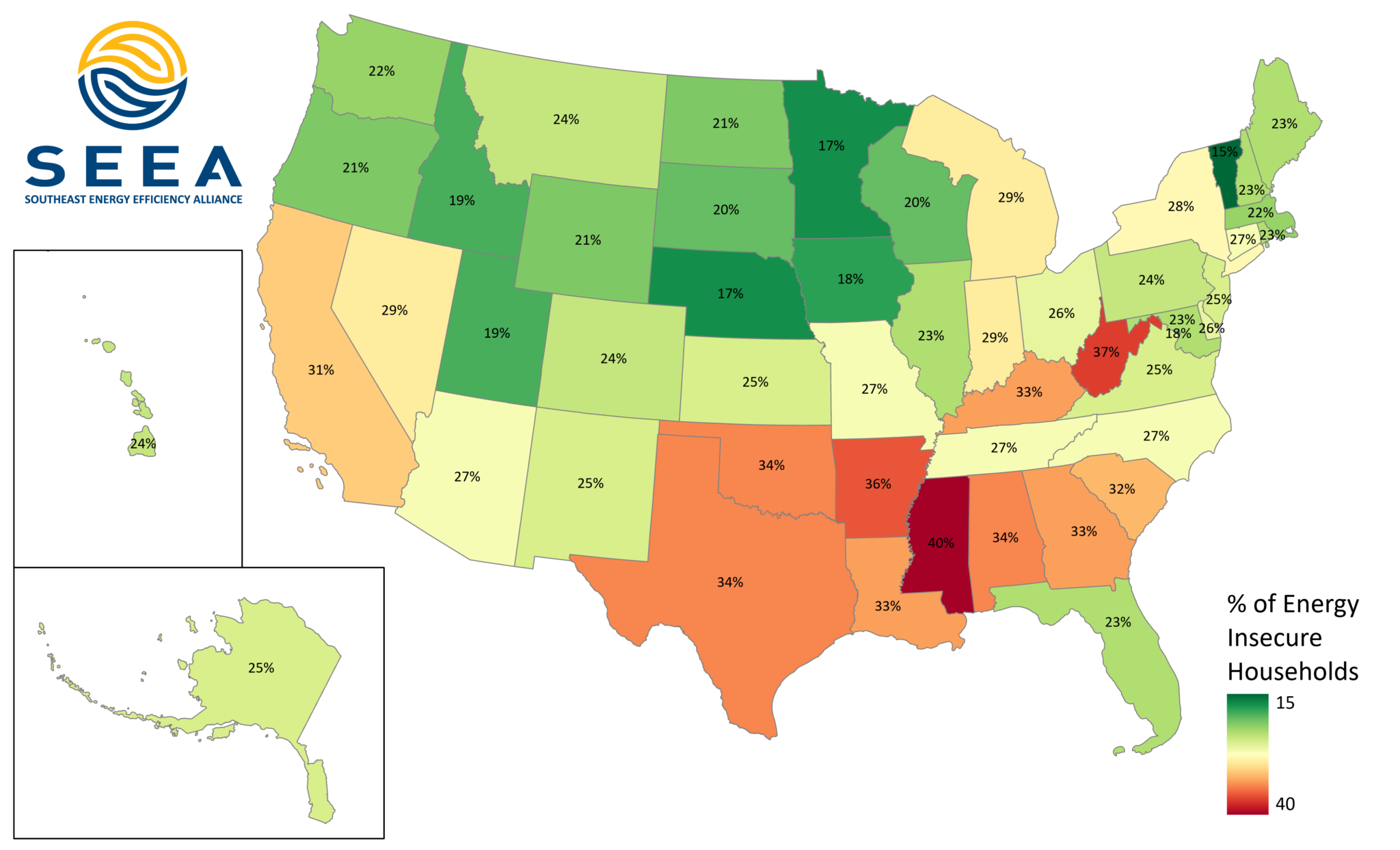
Millions of people in the South who struggle to pay their electric and gas bills every month are threatened with energy insecurity, or when a household cannot maintain vital energy services like heating and cooling. Energy insecurity undermines the health, safety and affordability of housing. The COVID-19 pandemic has only exacerbated this crisis.
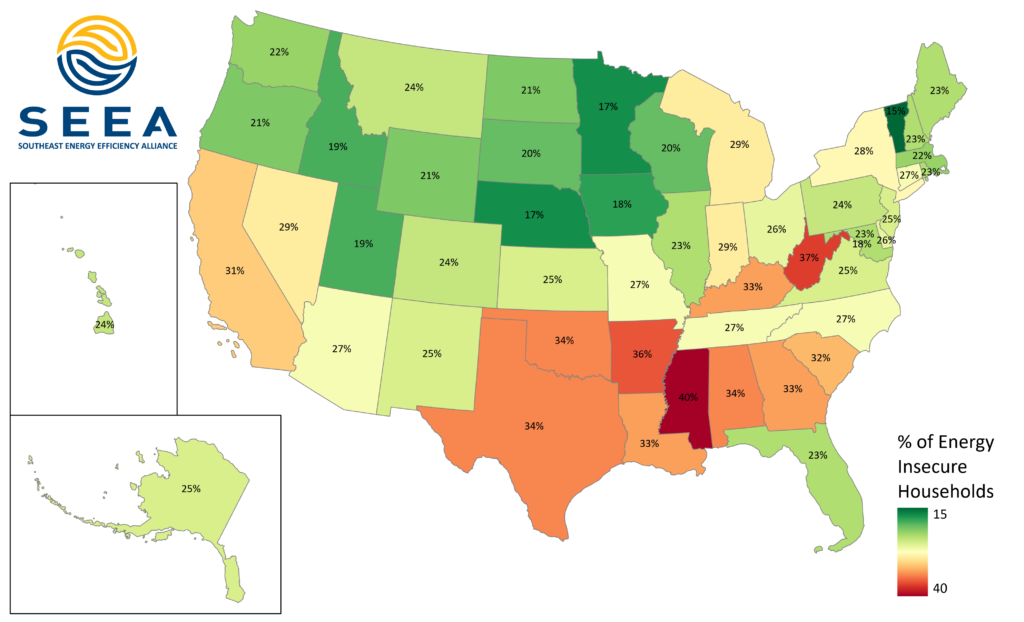
Using new state-level data from the Energy Information Administration’s 2020 Residential Energy Consumption Survey (RECS), this map shows that people living in the Southeast experience the highest rate of energy insecurity in the country. In Mississippi, where 2 out of 5 households struggle to keep on the lights and heat, people are more likely to be energy insecure than anywhere else in the U.S. Of the 9.3 million energy insecure homes in the Southeast, nearly one-third are in Florida and Georgia. People experiencing energy insecurity are at greater risk for respiratory illness, poverty, and being unable to survive or recover in the face of extreme weather.
Beginning with a report and StoryMap, published in 2021, our research team has led SEEA’s work in identifying the historical and current systemic issues that contribute to energy insecurity in the Southeast. In 2022, SEEA announced the Southeast Energy Insecurity Project and continues to advance energy efficiency as a mitigation tool to help people in the Southeast live in healthier, more comfortable homes. You can hear more about how to reduce energy insecurity in our upcoming webinar, Promoting Knowledge and Engagement – Addressing Energy Insecurity in the Gullah Community on Wednesday, Jan. 25 at 11 a.m. ET.