

December Map of the Month
By Laura Diaz-Villaquiran
Mississippi is strategically important in U.S. energy production, transportation, and storage. Bordering the Gulf and Mississippi River, the state has extensive energy infrastructure, including crude oil, natural gas, and refined oil pipelines. Mississippi holds one-quarter of the nation’s underground natural gas salt cavern storage capacity and is home to the largest single-reactor nuclear power plant in the United States.
Despite this strategic energy position, Mississippi’s households experience the highest rate of energy insecurity in the entire country, with four out of every ten households in the state struggling to pay their energy bills from month to month.
This financial precarity is reflected in the state’s high energy burdens, a measure of each household’s ability to afford their energy costs. According to most researchers, households that spend 6% or more of their income on energy are considered highly burdened, while those spending 10% or more are considered severely energy burdened. Mississippi ranks as the fifteenth most energy-burdened state nationally (across all incomes) and the seventh most energy-burdened for low-to-moderate-income (LMI) households, those who make 0-80% of the area median income (AMI).
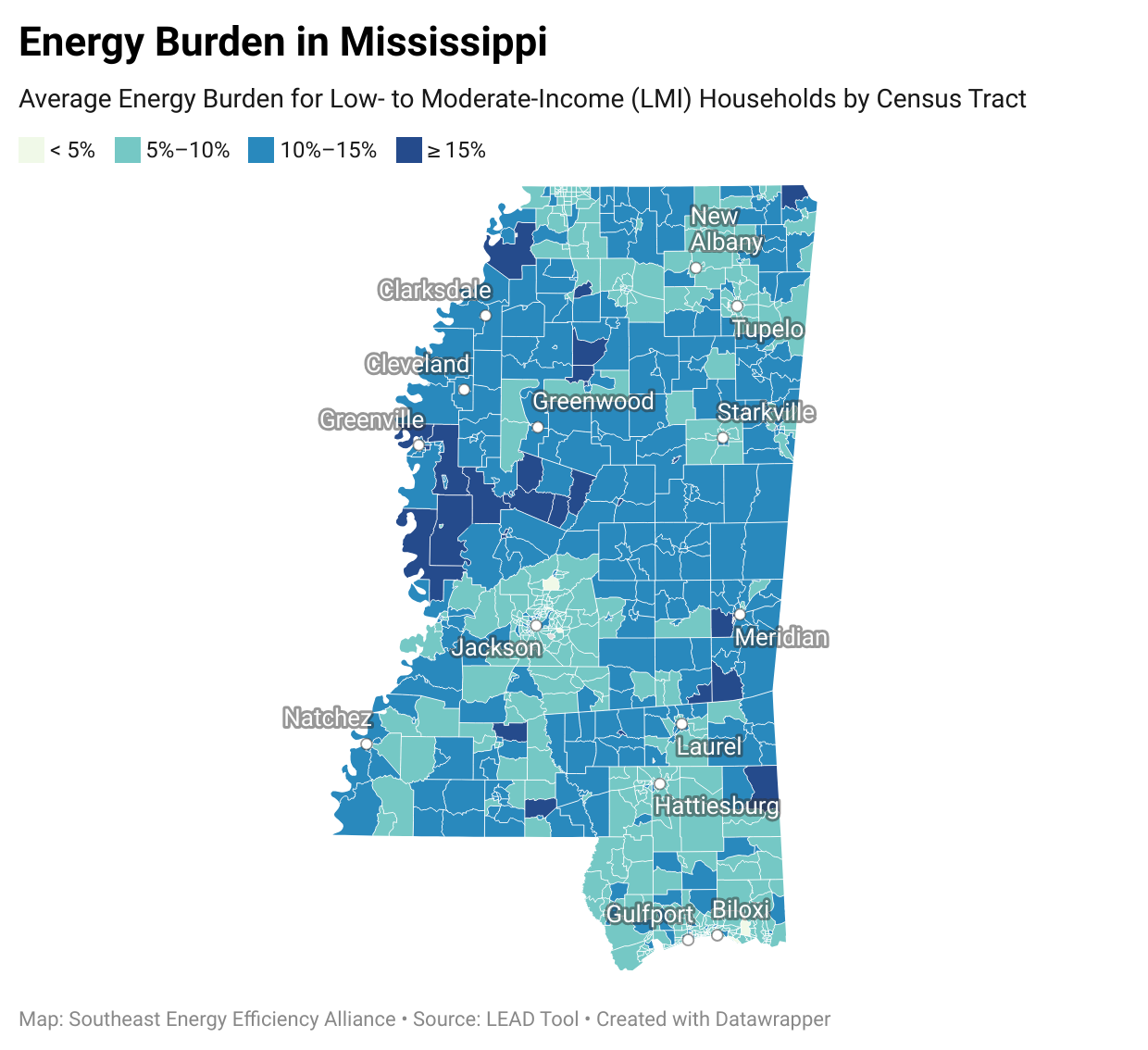
This month’s map of the month uses data from the U.S. Department of Energy’s Low Income Energy Affordability Data (LEAD) Tool to highlight average household energy burdens at the census tract level. As the map illustrates, energy affordability challenges are widespread across Mississippi.
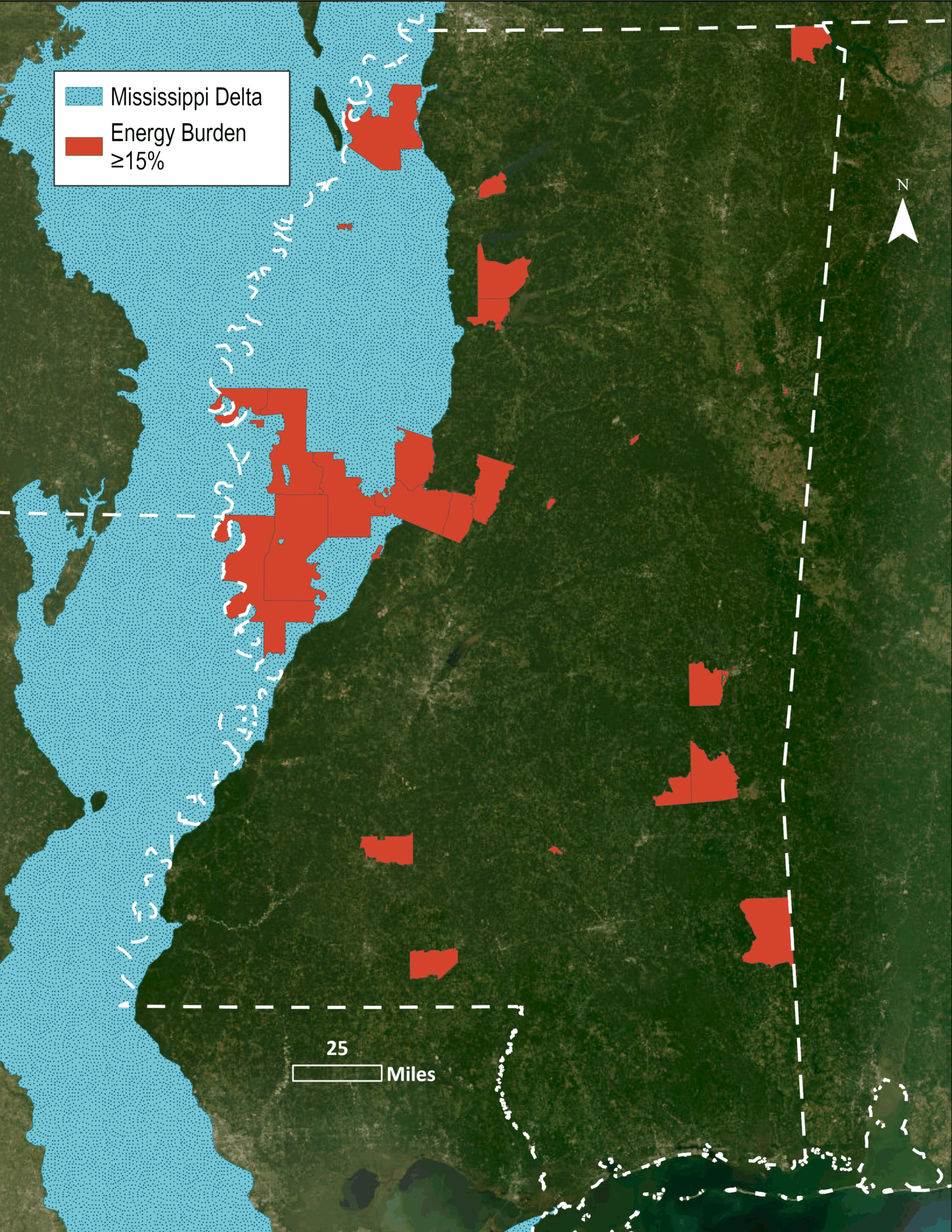
Census tracts with high and severe average household energy burdens are mostly concentrated in the Mississippi Delta region – bordering the Mississippi River to the west and the Yazoo River to the east – and the state’s rural communities.
The Mississippi Delta is one of the poorest parts of the nation, affordability challenges in this region are rooted in the legacies of slavery, segregation, and a lack of investment there. In 2024, these structural inequities are evident in Mississippi’s socioeconomic conditions where poverty rates exceed the national average (17.8% compared to 12.1%), and educational attainment (27% compared to 36.8%) and employment rates (55.7% compared to 60.6%) lag behind the national level. The affordability challenges faced by many Delta residents mirror those experienced across rural areas in the South, where limited access to reliable transportation, educational opportunities, and pathways to wealth building persist.
Understanding energy burden trends across the state highlights opportunities for targeted weatherization and home repair, proven strategies for reducing energy use, improving affordability for energy-burdened households, and lowering the strain on the energy grid, which supports overall system reliability.